

Views: 0 Author: Site Editor Publish Time: 2026-07-05 Origin: Site


Selecting the right capacity for a container BESS is not just an engineering choice. It represents a fundamental capital allocation decision. For facility managers and CFOs, under-sizing limits your peak-shaving potential. Over-sizing traps capital in unused capacity. You need a system tailored precisely to your energy demands. This prevents stranded assets and maximizes financial returns. This guide breaks down the technical, spatial, and financial realities of scaling from a modular 200 kWh BESS up to a utility-grade 2000 kWh BESS. We will help you align system capabilities directly with your site’s operational load profile. You will learn how to evaluate space constraints, navigate complex grid integration, and project realistic financial returns across different system sizes. Getting this alignment right ensures resilient operations and a stronger long-term return on your storage investment.
You must base your storage sizing on actual consumption data. Avoid choosing arbitrary capacity targets. Gather interval meter data in 15-minute increments from your utility provider. This data reveals your facility's true load profile. It highlights exact peak periods throughout the day. You can then align these historical peaks against specific system capacities.
We often see commercial and light industrial sites select a smaller capacity system. It handles targeted demand charge management perfectly. Facilities deploy it for Time-of-Use (TOU) arbitrage. It fits operations facing predictable, short-duration load spikes. Commercial retail buildings benefit greatly from this exact size.
Fast-charging EV stations also rely on this tier. They draw huge power bursts over mere minutes. A smaller battery shaves these spikes effectively. It prevents costly utility demand charges. You preserve capital while solving the immediate grid-draw problem.
Heavy industrial applications demand massive scale and endurance. A large system delivers sustained islanding capabilities. It provides reliable backup power for sensitive manufacturing lines during severe outages. Plant managers cannot afford momentary voltage drops. This capacity ensures production continuity.
Utility-edge deployments use this tier for large-scale renewable firming. It smooths out variable solar and wind generation. You also see these massive units performing grid ancillary services. They manage frequency regulation across regional power grids. They generate revenue by stabilizing utility networks.
Sometimes your operational needs fall exactly between these two extremes. You might evaluate a 1000 kWh battery storage solution. It serves as an excellent transitional tier. Aggressive commercial applications often require longer duration discharge. They need more stored energy to shift loads entirely off-peak. However, they want to avoid multi-megawatt infrastructure upgrades. This mid-tier system fills that exact operational gap beautifully.
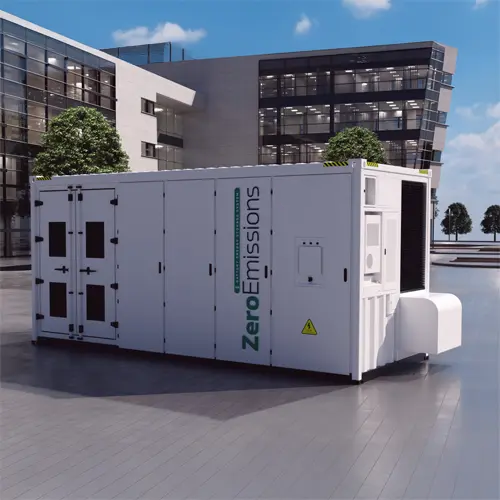
Scaling up capacity requires drastically different site preparation. You must evaluate physical space and electrical integration early in your planning phase.
A smaller system offers excellent deployment flexibility. It often fits inside highly compact, customized 10ft containers. You might even use modular outdoor cabinets. You can easily site these units near existing switchgear. They demand minimal concrete work. You rarely need specialized heavy rigging to drop them into place.
A massive storage block changes your site dynamics completely. It requires standard 20ft or 40ft ISO containers. You must pour heavy reinforced concrete pads. You must enforce rigorous setback distances to meet fire codes. Deployment always demands crane access. You must map out turning radiuses for flatbed delivery trucks long before installation day.
Modern industrial energy storage requires advanced electrical infrastructure. You must integrate robust 3 phase BESS architectures to balance heavy, asymmetric loads. Single-phase setups simply cannot handle these industrial demands safely.
Transformer sizing becomes a major technical hurdle as you scale. Upgrading hardware usually forces a complete switchgear overhaul. Your existing electrical panels rarely support massive megawatt-level power flows. You must budget for comprehensive utility-side upgrades. Ignoring this reality leads to stranded assets sitting unconnected on your property.
Safety regulations scale aggressively alongside battery capacity. A small modular cabinet relies on basic HVAC cooling. A massive container requires advanced liquid cooling mechanisms. Liquid cooling maintains stable temperatures across thousands of densely packed cells. It prevents thermal runaway effectively.
Fire suppression becomes exponentially more critical at higher tiers. You must meet stringent NFPA 855 standards. These large systems require automated aerosol or clean gas fire suppression networks. Permitting authorities scrutinize large-scale safety designs heavily. You must ensure your local fire marshal approves the suppression strategy early.
| System Capacity | Typical Enclosure | Cooling Method | Installation Requirements |
|---|---|---|---|
| 200 kWh | Outdoor Cabinet / 10ft Container | Air Cooling (HVAC) | Standard pad, forklift access, minimal electrical upgrades. |
| 1000 kWh | 10ft - 20ft ISO Container | Advanced HVAC / Basic Liquid | Reinforced pad, moderate setbacks, standard 3-phase upgrades. |
| 2000 kWh | 20ft - 40ft ISO Container | Precision Liquid Cooling | Heavy structural pad, crane rigging, strict NFPA 855 setbacks, transformer overhaul. |
Financial modeling dictates your ultimate technology choice. You must look far beyond the initial purchase order.
Capacity and price do not share a perfectly linear relationship. The battery pack cost per kWh decreases as you scale toward larger units. You buy battery cells in massive bulk. This lowers the per-unit price significantly.
However, you face strict baseline costs. Every system needs a Power Conversion System (PCS). Every system needs an Energy Management System (EMS). These core components carry fixed minimum costs regardless of the battery pack size. A smaller unit carries a higher proportion of these fixed costs. A larger unit dilutes these fixed costs across more kilowatt-hours.
Hidden multipliers often ruin poorly planned project budgets. Permitting applications cost significantly more for larger systems. Specialized engineering reviews consume your timeline. Interconnection impact studies disproportionately increase the upfront cost of massive units. Utility companies charge high fees just to evaluate potential grid impacts.
You also face ongoing operational expenses (OPEX). Massive enclosures consume significant auxiliary energy to run liquid cooling pumps. We call this a parasitic load. You must fund annual fire safety audits. You must budget for eventual cell augmentation. Batteries degrade, and you will eventually need to add fresh cells to maintain performance guarantees.
Never rely strictly on day-one nameplate capacity for ROI calculations. You must calculate the Levelized Cost of Storage (LCOS). Factor in round-trip efficiency (RTE) losses. Real-world systems lose energy during the conversion from AC to DC and back to AC. Project your exact degradation rates over a ten-year horizon. These crucial steps give you a realistic, bankable financial payback model.
Common Mistake: Many developers fail to include auxiliary HVAC energy consumption in their payback models. This oversight artificially inflates projected utility savings.
You must separate marketing claims from harsh engineering realities. Failing to grasp cell chemistry limitations causes early system failure.
A massive system does not yield its total rated capacity in daily usable energy. Decision-makers frequently misunderstand this technical reality. You must factor in Depth of Discharge (DoD) limitations. Manufacturers require you to maintain a 10% to 90% state of charge.
This restriction preserves your warranty. It protects the cells from rapid internal degradation. Your usable energy footprint shrinks accordingly. If you need exactly 2000 kWh of output, you must purchase a physically larger battery to account for these strict DoD buffers.
How fast you draw energy matters immensely. Engineers call this the C-rate. A 1C rate on a small system empties it in exactly one hour. A 0.5C rate stretches the discharge over two hours.
Industrial loads often pull extreme surge currents. Heavy motors and pumps demand massive instant power. These surges force the battery to discharge aggressively. High discharge rates generate immense heat and stress the cells. You may need to oversize your total capacity simply to handle the surge load. Oversizing protects battery health during aggressive discharge events.
Large projects face severe external delays. Supply chain lead times for large-capacity transformers often stretch into many months. You cannot commission your site without them. Grid interconnection queues pose another massive risk.
Utility approval delays routinely stall systems over 1 MWh. Grid operators must study how your massive battery affects local grid stability. You must submit interconnection applications extremely early in the planning phase. Delaying this paperwork guarantees a stalled deployment.
You need a rigid procurement strategy to secure the right hardware. A structured approach eliminates vendor ambiguity.
Start by analyzing your historical energy consumption. Conduct a full 12-month load profile analysis. Identify your absolute peak demand periods. Understand seasonal variations in your power usage. Summer cooling loads look very different from winter heating loads. Document these patterns meticulously.
Audit your physical space carefully. Measure available clearance spaces. Identify local setback rules. Inspect your existing electrical infrastructure. Determine your current transformer capacity. Complete this exhaustive audit before requesting any vendor quotes. Vendors require this exact data to engineer accurate, reliable proposals.
Write a strict, highly detailed RFP. Demand transparent performance guarantees from every bidder. Vendors must prove their capacity retention estimates over a 10-year lifespan. Require clearly separated line items.
They must separate hardware, software (EMS), shipping, and commissioning costs. Demand a transparent long-term O&M pricing schedule. Vague pricing blocks hide excessive markups. Force vendors to detail their preventative maintenance intervals.
We highly recommend engaging an independent energy consultant. You can also utilize vendor-agnostic sizing software. Test your assumptions before committing to a specific tier. Independent analysis prevents costly sizing mistakes. It validates your load profile calculations against real-world degradation curves.
Your final equipment choice hinges on rigorous engineering analysis. You must evaluate your facility's load profile, available real estate, and upfront capital tolerance carefully.
Schedule a technical sizing audit today. Gather your 15-minute interval data. Download a reliable load-profile calculation template to begin your engineering analysis immediately.
A: A massive system typically occupies a standard 20ft or 40ft ISO container. It demands heavy reinforced concrete pads and wide setback distances to meet fire codes. In contrast, a smaller system fits inside compact outdoor cabinets or highly customized 10ft containers. You can usually place smaller units much closer to your existing facility switchgear.
A: Yes, hardware costs benefit from economies of scale. The underlying battery cells cost less per kWh as you scale up to multi-megawatt sizes. However, you must account for elevated installation expenses. Larger systems require expensive transformer upgrades, complex liquid cooling hardware, and extensive site preparation. These factors offset some of the initial hardware savings.
A: No. This tier primarily handles targeted peak shaving. It can back up highly specific critical loads, like servers or emergency lighting. It lacks the massive energy reserves required to sustain whole-facility operations. Heavy manufacturing lines and sustained islanding operations typically require multi-megawatt systems to function safely during prolonged utility outages.
A: Most top-tier systems deliver a cycle life between 6,000 and 8,000 cycles. This translates to roughly 10 to 15 years of operational life. Your actual lifespan depends entirely on daily usage patterns. Aggressive C-rates, frequent deep discharges, and poor thermal management will accelerate cell degradation significantly.


