

Views: 0 Author: Site Editor Publish Time: 2026-10-08 Origin: Site


Adequate site illumination remains a mandatory compliance requirement for heavy construction projects globally. The equipment you choose directly impacts labor overhead, workflow consistency, and onsite safety records. You cannot afford to overlook these operational impacts when planning a site. Fleet managers and procurement teams face a distinct daily dilemma. You must balance the lower initial capital expenditure of manual winch towers against the profound advantages of modern hydraulic systems. Selecting the wrong lifting mechanism can easily inflate maintenance budgets while increasing hazard exposure. We provide an evidence-based breakdown of manual versus hydraulic masts. You will explore distinct mechanical differences, critical site risk factors, and practical deployment efficiency metrics. This comprehensive guide equips you to make confident, data-driven purchasing decisions for your equipment fleet.
Understanding the mechanical foundation of each mast type helps you anticipate future maintenance needs. Both systems achieve the same final goal. They elevate light fixtures to illuminate broad areas. However, their internal mechanics dictate entirely different operator experiences.
Manual masts rely on traditional mechanical advantage. They typically feature hand-cranked dual winches. One winch manages vertical extension. The other winch controls horizontal tilt. The system utilizes galvanized steel cables routed through a series of internal pulleys. Operators crank the handle to wind the cable and elevate the mast. Once they reach the desired height, they must insert locking pins.
This design requires direct physical exertion. The operator must stand intimately close to the mast footprint during deployment. They manually manage the tension load. It provides a simple, highly tactile operation without complex electronics.
Hydraulic systems remove physical labor from the equation. They operate via an electric-over-hydraulic pump. The onboard generator powers this pump directly. The system pushes pressurized fluid into sequential telescopic rams. These rams extend smoothly to raise the mast.
Operators deploy these masts via a centralized push-button control panel. This design allows you to stand back from the immediate danger zone. It replaces cables and winches with fluid dynamics and automated valves. The entire process requires zero physical strain from the worker.
Workplace safety heavily influences equipment procurement. Regulatory bodies strictly monitor construction site hazard mitigation. Lifting mechanisms inherently carry specific mechanical and ergonomic risks. You must evaluate how each mast type addresses these universal dangers.
Construction sites act as highly abrasive environments. Airborne dust, moisture, and debris constantly bombard equipment. Manual cables degrade rapidly under these conditions. Dust acts as an abrasive paste on pulleys. Moisture introduces hidden rust inside steel cable strands. This degradation leads to sudden cable fraying or catastrophic snapping under tension.
Hydraulic cylinders utilize enclosed fluid systems. Dust cannot easily penetrate the internal mechanisms. More importantly, modern hydraulic rams feature integrated fail-safe holding valves. If a hydraulic hose bursts, the holding valve traps the pressure. This prevents the heavy mast from plummeting downward. It provides an automated layer of fail-safe security.
Manual cranking demands repetitive shoulder and back exertion. Raising a heavy mast takes several minutes of continuous effort. Operators often perform this task at the end of exhausting shifts. Fatigue significantly increases the risk of repetitive motion injuries. Adverse weather compounds this physical strain. Freezing rain or thick mud makes turning a stiff metal crank dangerous.
Push-button hydraulic systems eliminate this ergonomic hazard. They protect your workforce from unnecessary physical exhaustion. This reduction in daily strain actively lowers worker compensation claims.
Manual systems ultimately rely on locking pins. Operators must manually insert these metal pins to secure the mast. A fatigued worker might forget this step. They might insert the pin incorrectly. This human error leaves the entire weight hanging solely on the winch brake. If that brake slips, the mast drops.
Hydraulic systems utilize automated pressure retention. The fluid pressure inherently supports the load. You do not rely on a tired operator remembering a mechanical safety step. It removes human error from the load-bearing equation.
Time management directly dictates project profitability. Transient work zones require constant equipment repositioning. The speed at which you can illuminate a site affects overall operational momentum.
Consider the raw time required for setup. A manual mast demands continuous physical cranking. It often takes several minutes to achieve full extension. It requires two hands and full attention. Conversely, a hydraulic deployment takes 10 to 15 seconds. The operator simply holds a toggle switch. The fluid pressure handles the heavy lifting instantly.
This time difference multiplies rapidly across large sites. A single site manager often deploys multiple units at dusk. We can break down this workflow:
If they must manually crank 10 units, deployment consumes nearly an hour. Hydraulic units slash this setup window to mere minutes. You save profound cumulative labor hours every single month.
Conditions change frequently during night shifts. You might need to lower a mast slightly to avoid blinding passing traffic. Manual masts often require full retraction and repinning to adjust heights safely. Hydraulic systems excel here. They allow rapid, incremental height adjustments. You simply tap the control button. This improves site adaptability without halting surrounding workflow.
Procurement teams must look beyond the initial purchase order. Routine maintenance heavily dictates long-term equipment viability. You must clearly understand the distinct upkeep requirements for each system.
Manual masts undeniably win the initial capital expenditure battle. A standard diesel light tower featuring a manual winch represents the most budget-friendly acquisition. It satisfies strict, low-budget procurement constraints perfectly. Smaller fleets often rely on this lower entry price.
The long-term maintenance profiles differ drastically. We outline these realities below.
| Maintenance Category | Manual Winch System | Hydraulic Lifting System |
|---|---|---|
| Primary Wear Components | Steel cables, pulleys, winch brakes | Hydraulic fluid, valve seals, hoses |
| Environmental Vulnerability | High (Grit degrades exposed moving parts) | Low (Enclosed system resists external grit) |
| Routine Inspection Needs | Weekly cable tension and fray checks | Monthly fluid level and leak inspections |
| Replacement Frequency | High (Cables require regular swapping) | Low (Fluid changes follow engine intervals) |
Manual masts face high replacement frequencies for steel ropes. Grit ingress destroys pulleys rapidly. Conversely, hydraulic systems experience lower daily mechanical wear. However, they demand strict adherence to fluid change schedules. You must inspect seal integrity routinely to prevent environmental fluid leaks.
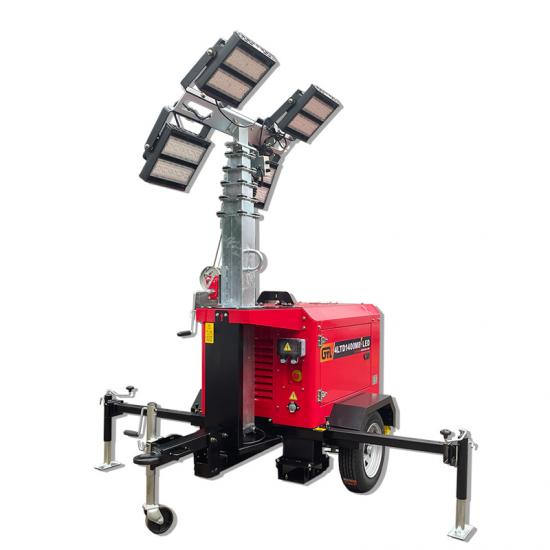
Forward-thinking fleets combine advanced technologies to optimize daily expenses. You can pair a high-efficiency power source with an automated mast. For example, deploying a 7m LED diesel light tower equipped with hydraulics maximizes operational returns. It burns less fuel due to LED efficiency. It minimizes daily manual labor requirements. This specific configuration ultimately yields highly favorable long-term cost profiles.
No single technology universally dominates every application. You must align your mast choice with your specific site realities. Use the following framework to guide your specification process.
Manual options remain highly relevant for specific scenarios. They excel when initial budget constraints override all other factors.
Modern fleets increasingly standardize on hydraulic actuation. The operational benefits heavily outweigh the initial premium in fast-paced environments.
The choice between manual and hydraulic masts defines your daily site operations. You are ultimately choosing between minimizing upfront spend or maximizing daily workflow efficiency. Manual units provide reliable, low-cost acquisition for static, long-term deployments. However, hydraulic units offer profound advantages for active sites. They eliminate physical strain, mitigate drop risks, and slash daily setup times. For modern, fast-paced construction environments, the premium paid for hydraulic actuation pays immediate dividends. It enhances site safety and optimizes labor hours continuously.
Evaluate your current equipment strategy carefully. Review your specific fleet size, daily deployment frequency, and typical environmental conditions. We encourage you to request a detailed consultation or quote tailored to your exact project demands. Upgrading your lifting mechanisms can transform your nightly operational efficiency.
A: While cold affects fluid viscosity, modern hydraulic units use all-weather fluids and engine-warmed enclosures to maintain reliability. Manual cables, conversely, can freeze or snap if ice accumulates in the pulleys.
A: No. The chassis, weight distribution, and control panel integration of a diesel light tower are engineered specifically for the chosen mast type at the factory level.
A: Both manual and hydraulic towers are rated for specific wind speeds (typically up to 80 km/h or 50 mph) when outriggers are properly deployed. However, hydraulic masts can be retracted much faster in the event of sudden severe weather.


