

Views: 0 Author: Site Editor Publish Time: 2026-09-22 Origin: Site


Standard retail portable power units are everywhere today. You see them in hardware stores, online marketplaces, and big-box retailers. They work perfectly fine for weekend camping trips and light tailgating. However, commercial, industrial, and specialized off-grid applications frequently exceed the thermal, continuous output, and integration limits of these off-the-shelf consumer models. When heavy construction tools or critical medical equipment require flawless continuous power, standard units often fail.
This article provides a rigorous framework for determining when you should abandon retail limitations. We will guide you on how to specify a custom mobile power station based on your unique operational demands. You will learn how to navigate strict safety compliance, evaluate long-term lifecycle benefits, and partner with the right engineering teams. Ultimately, you will understand exactly when a custom power build shifts from a luxury to an absolute operational necessity.
Consumer-grade marketing relies heavily on peak wattage numbers. A retail unit might advertise 3000W of total output. However, this peak rating only survives for a few brief seconds. Sustained, continuous draw tells the real story. Heavy construction tools, field refrigeration units, and remote telecom nodes require constant, unrelenting current. They operate 24 hours a day under heavy strain. Consumer inverters quickly overheat under these sustained loads. They shut down automatically to protect their internal circuitry. This abrupt failure leaves your critical operations completely dead.
Standard power stations degrade rapidly in extreme environments. Lithium battery cells hate freezing temperatures. They also suffer permanent capacity loss in high heat. High-particulate environments introduce another critical failure point. Desert construction sites blow fine dust straight into exposed cooling fans. The fans jam, the electronics bake, and the unit dies. You need custom thermal management to survive this. Often, your operations require fully sealed IP65 or IP67 enclosures to withstand this daily real-world abuse.
Form factor often forces enterprise users into custom builds. Retail units generally look like bulky cubes. They rarely slide smoothly into tight, pre-existing spaces. You might need your battery to fit precisely inside an emergency vehicle chassis. Perhaps you must mount them into standardized industrial racking systems. Custom builds shape the battery casing to your exact physical constraints. You eliminate wasted space, avoid awkward mounting brackets, and secure the equipment safely.
Writing down your exact mobile power station specifications helps engineers select the right internal chemistry. You generally choose between two main lithium types. LiFePO4 (LFP) provides exceptional longevity. It handles thermal stress safely and offers thousands of reliable charge cycles. NMC (Nickel Manganese Cobalt) delivers superior energy density. You use NMC when weight and physical space are heavily restricted. For stationary or heavy industrial use, we almost always recommend LFP builds.
Table 1: Battery Chemistry Comparison
| Feature | LiFePO4 (LFP) | NMC (Nickel Manganese Cobalt) |
|---|---|---|
| Energy Density | Lower (heavier footprint) | Higher (lighter footprint) |
| Cycle Life | 3,000 to 5,000+ cycles | 500 to 2,000 cycles |
| Thermal Stability | Excellent (high safety threshold) | Moderate (requires strict cooling) |
| Best Use Case | Stationary, heavy industrial, off-grid | Highly portable, weight-sensitive needs |
Standard units offer basic AC outlets and consumer USB ports. Industrial setups demand vastly different connections. You might require high-amp Anderson connectors for heavy DC loads. You may need specific 220V/240V outputs for European heavy machinery. Hardwired terminal blocks offer secure, vibration-proof connections inside moving vehicles. Custom front panels ensure your operators can plug in specialized equipment directly, without relying on fragile third-party adapters.
Fleet operators need granular performance data. Custom setups include advanced Battery Management Systems (BMS). A smart BMS enables CAN bus communication and direct API integration. You can monitor fleet charge levels remotely from a central office. You track battery health across dozens of different job sites simultaneously. This real-time telematics data prevents unexpected field failures. It allows you to schedule maintenance before a complete system shutdown occurs.
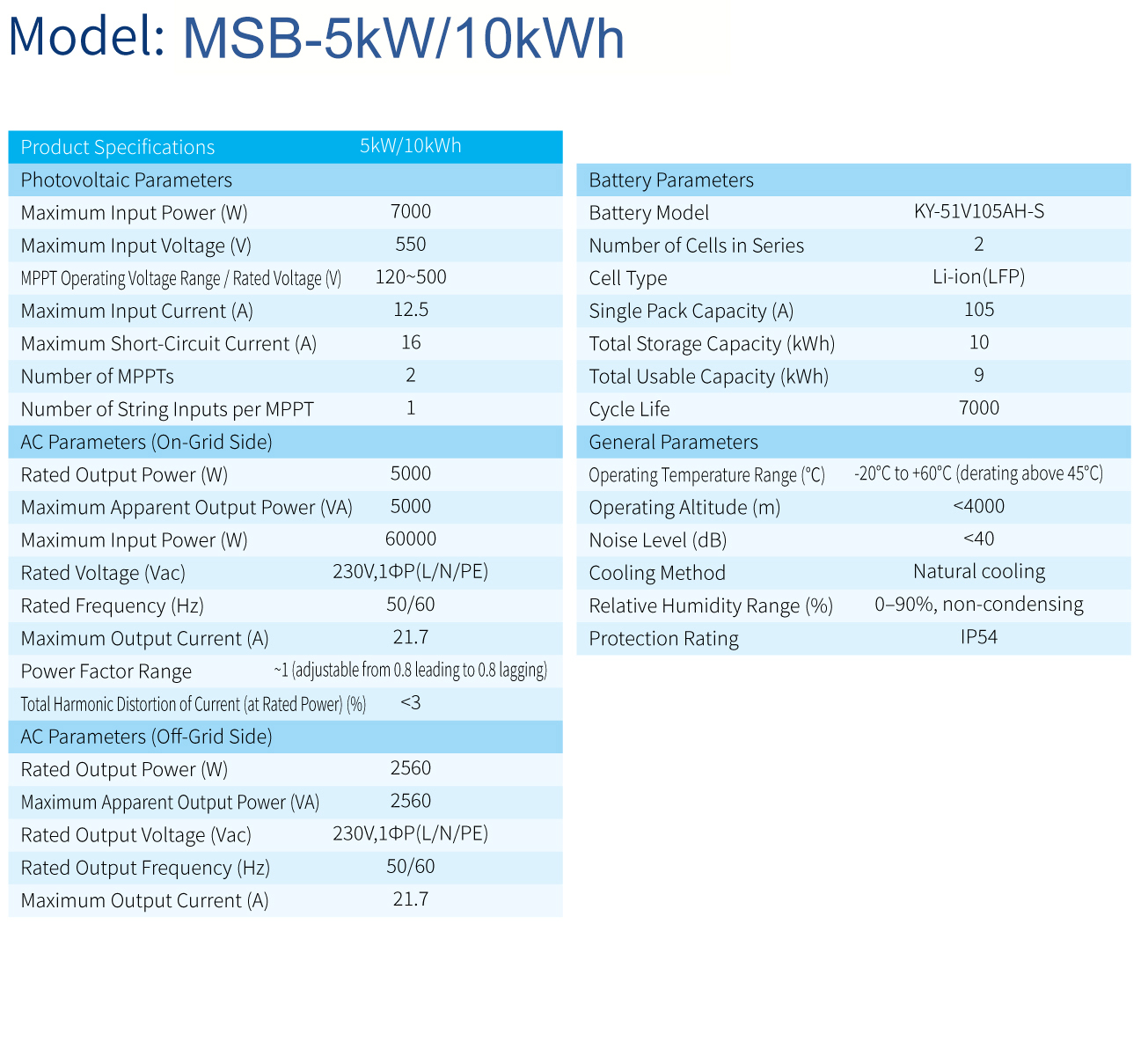
Heavy-duty work sites require massive energy storage. A standard 1kWh retail battery cannot power a remote framing crew. Industrial projects require substantial, reliable capacity. For example, deploying an msb 5kw 10kwh mobile photovoltaic power unit supports multiple heavy tools simultaneously. It easily handles the brutal electrical demands of remote mining operations. You get commercial-grade solar input to keep demanding operations moving continuously from dawn until dusk.
True off-grid deployments demand absolute operational reliability. A high-yield mobile photovoltaic power station can run indefinitely. It relies entirely on the sun, completely eliminating your grid dependency. Achieving this requires precise solar charge controller matching. The internal MPPT (Maximum Power Point Tracking) must align perfectly with your specialized panel array. Mismatched controllers waste valuable solar energy and eventually stall your equipment.
Businesses renting out equipment face unique physical challenges. Renters abuse hardware relentlessly. Consumer units crack, scratch, and break easily in rental scenarios. Rental deployments need ruggedized steel or thick composite casings. They require tamper-proof interfaces so users cannot accidentally alter critical BMS voltage settings. You also want customized, permanent branding on the enclosure. A purpose-built unit survives drops, harsh weather, and untrained operators while actively promoting your brand.
Off-grid forums frequently praise DIY battery setups. They highlight cheap raw cell prices and modular flexibility. However, they consistently ignore the immense hidden burdens. You spend countless hours sourcing individual compatible components. You pay expensive hourly rates for skilled assembly labor. Furthermore, you receive zero comprehensive warranty. When a DIY system fails in the field, your entire operation stops. You bear the complete burden of troubleshooting and component replacement.
Commercial environments demand strict safety standards. Partnering with a verified mobile power station supplier guarantees legal compliance. Professional manufacturers ensure your units meet stringent UL, CE, and FCC standards. Transporting large lithium batteries across borders requires official UN38.3 certification. DIY enterprise builds rarely pass these strict legal hurdles. Failing a site inspection because of uncertified batteries can halt your project instantly.
Lithium batteries hold massive amounts of dense energy. A simple internal short circuit can trigger thermal runaway. This results in catastrophic, uncontrollable fires. Professional manufacturers mitigate this danger entirely. They run rigorous BMS stress testing. They design proper physical shielding and thermal barriers between internal cell blocks. Moreover, established suppliers carry substantial liability insurance. This protects your enterprise from devastating financial ruin in the rare event of an accident.
Standard retail units fail quickly under commercial stress. You end up buying fresh replacements every single year. Custom engineering requires a higher initial capital investment. However, you must evaluate the lifecycle reliability. Custom units last for thousands of cycles under heavy, continuous loads. They drastically reduce your equipment downtime. Every hour of downtime costs your business substantial money. Investing in a robust custom build yields vastly superior operational uptime.
Summary Chart: Custom vs. Retail Reliability Outcomes
| Metric | Off-The-Shelf Retail Unit | Custom Engineering Build |
|---|---|---|
| Expected Commercial Lifespan | 12 to 18 months | 5 to 10+ years |
| Failure Rate under High Strain | High (frequent thermal shutdowns) | Low (optimized thermal design) |
| Downtime Impact | Severe (requires full replacement) | Minimal (repairable components) |
Custom hardware takes time to develop properly. Set realistic expectations for this project timeline. Rushing the prototype phase leads to catastrophic integration failures later. You should expect the process to follow a structured path.
You must gather exact metrics before contacting an engineering team. Guessing your power needs leads to underperforming or overly expensive builds. What is your continuous running load? What is your maximum starting surge load? Document your precise dimensional limits and extreme operating temperatures. Define your expected daily cycle life clearly. Having these exact metrics ready guarantees an accurate, efficient, and successful quoting process.
Custom power solutions represent a strategic investment in operational reliability. They are not simple, disposable hardware purchases. Pushing standard consumer equipment past its intended design parameters always backfires. It causes unexpected downtime and creates serious field safety hazards.
We recommend you take the following next steps:
The right industrial power partner will completely transform your off-grid capabilities, keeping your operations running smoothly no matter where the job takes you.
A: MOQs vary entirely based on the extent of customization. Simple port swaps or aesthetic color changes might only require 50 to 100 units. Entirely new mold designs, custom vehicle chassis integration, or proprietary BMS programming often push MOQs to 500 units or more to cover the heavy upfront engineering costs.
A: A realistic timeline spans three to six months. Initial CAD design and BMS programming take roughly four weeks. Prototype testing and revisions require another four to six weeks. Once the prototype is approved, mass production and quality assurance testing add an additional four to eight weeks before final shipping.
A: Yes. A custom manufacturer can match specific MPPT controllers to your existing solar array voltages and outputs. You simply provide the open-circuit voltage (Voc) and maximum current of your panels. The engineers will select an internal controller that safely and efficiently maximizes your solar harvest.
A: You must demand UN38.3 certification for safe legal transport. Additionally, request UL certification for internal battery safety, CE for European market compliance, and FCC to ensure the electronics do not cause electromagnetic interference. These are non-negotiable safety standards for any industrial lithium-based storage system.


