

Views: 0 Author: Site Editor Publish Time: 2026-07-10 Origin: Site


Selecting between a 600 kWh and a 1000 kWh BESS isn't just about budget—it is a strict engineering and financial alignment with your facility’s load profile. Oversizing limits your Return on Investment (ROI) due to stranded capacity, while undersizing leaves your site vulnerable to peak demand penalties and operational downtime. You need a system precisely matched to your operational rhythm.
This guide breaks down the technical, spatial, and regulatory realities of sizing an industrial battery system. You will gain a clear framework to justify your hardware selection. We explore discharge rates, physical footprint constraints, and balance of system requirements. By understanding these variables, you can confidently specify a system matching your distinct energy demands.
Energy storage sizing begins by isolating your primary operational objective. Facility managers must distinguish between energy arbitrage and demand charge management. Energy arbitrage involves shifting consumption. You store power during off-peak periods and discharge it when grid tariffs spike. This strategy requires substantial energy reserves to sustain operations over multiple hours.
Demand charge management focuses entirely on clipping short, intense usage spikes. You deploy power rapidly during 15-minute intervals when heavy machinery activates. The system suppresses grid-facing demand peaks. You must evaluate the power versus energy metric to select the right equipment. Most modern industrial units operate at a 0.5C rating. This specification dictates how quickly the battery discharges its stored capacity.
A 0.5C rating means the system discharges fully over two hours. At 600 kWh, a 0.5C system delivers a maximum continuous output of 300 kW. At 1000 kWh, the same 0.5C rating yields a 500 kW output. If your facility registers a peak demand spike of 450 kW, the smaller system simply cannot discharge fast enough to cover the surge. It hits a bottleneck at 300 kW, leaving the remaining 150 kW exposed to utility penalties. Capacity must align strictly with your maximum instantaneous draw.
Integration context also dictates sizing. You must evaluate how the system pairs alongside existing solar arrays. Properly configured commercial battery storage ensures no clipped solar generation goes to waste. When solar production exceeds facility consumption, the battery captures the surplus. A larger capacity allows higher surplus retention, preventing export limits from bottlenecking your renewable assets.
| Objective | Duration Requirement | Key Metric | Ideal Capacity Match |
|---|---|---|---|
| Energy Arbitrage | 2 to 4 hours | Total kWh | 1000 kWh |
| Demand Management | 15 to 30 minutes | Peak kW Output | 600 kWh |
| Solar Self-Consumption | 4+ hours (Overnight) | Usable Energy Limit | Depends on Array Size |
Mid-sized industrial plants often discover their optimal operational rhythm using a 600 kWh BESS. These units target specific industrial applications perfectly. Precision manufacturing plants, cold storage warehouses, and mid-tier processing lines typically exhibit predictable, short-duration demand spikes. Compressors start up, chillers activate, or conveyors initiate. These events draw heavy power briefly before settling into steady operational states.
You deploy this capacity primarily as peak shaving energy storage. The system waits for facility load to approach a predetermined threshold. Once demand crosses the setpoint, the battery dispatches power instantly. It covers the spike, shielding the grid meter from seeing the surge. This aggressive demand charge reduction requires precise software control rather than massive energy reserves. You offset the spike without over-committing physical hardware footprint.
Deployment advantages strongly favor this tier. Manufacturers usually package these systems modularly. They arrive as integrated outdoor cabinets rather than massive shipping containers. Modular architecture demands significantly smaller concrete pads. You avoid complex heavy-duty rigging during installation. Thermal management relies on standardized, self-contained HVAC units mounted directly on the cabinet doors. This simplicity accelerates the timeline for utility interconnection approvals.
Beyond peak management, this scale serves beautifully as microgrid battery storage for critical loads. It will not power an entire factory through an extended grid outage. However, it successfully isolates and supports vital infrastructure. You can route power specifically to control rooms, critical chilling loops, or sensitive automation equipment. The unit ensures safe shutdown sequences or maintains core operations until external generators synchronize.
Common Mistakes at 600 kWh:
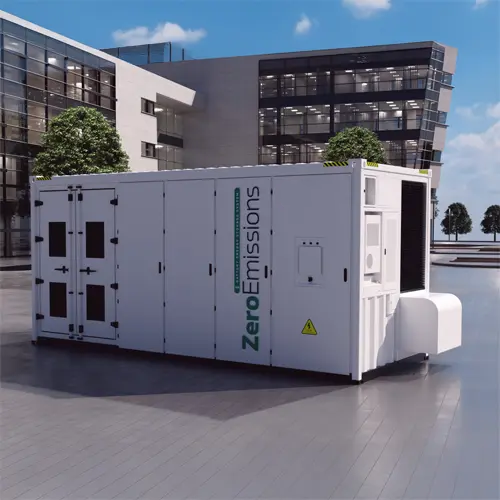
When operations scale, energy demands shift from brief spikes to sustained high-draw plateaus. Heavy industrial manufacturing, electric vehicle fleet charging depots, and multi-shift processing plants require massive reserves. A 1000 kWh BESS provides the necessary depth of discharge. It powers intensive processes across consecutive hours without draining prematurely.
The operational strategy at this scale usually involves sustained load shifting. You might need to move heavy machinery operations off the grid for two to four straight hours. EV charging depots face similar challenges. A fleet of delivery trucks returning at 5 PM creates an immense, prolonged draw. A megawatt-hour system absorbs this impact smoothly. Furthermore, this capacity qualifies facilities to participate in utility-scale ancillary services. You can dispatch stored energy back to the grid to stabilize local frequencies.
Crossing into the megawatt-hour territory triggers a fundamental shift in physical form factor. Manufacturers abandon modular cabinets. The hardware moves directly into 10-foot or 20-foot ISO standard containers. This containerization requires rigorous site planning. You are no longer placing a large cabinet against a wall; you are dropping a heavy industrial structure onto your property. The thermal management shifts from basic cabinet chillers to heavy-duty liquid cooling or complex ducted HVAC systems. The infrastructure resembles a standalone data center.
You gain distinct economies of scale at the cell level. Larger enclosures pack cells more densely. However, the balance of system demands intensive upgrades. The sheer volume of an industrial BESS commands custom-engineered switchgear. Transformers must handle continuous 500 kW flows safely. The foundational site preparation expands dramatically. You must weigh the increased energy density against the expanded footprint and civil engineering prerequisites.
Upgrading capacity alters your site parameters significantly. You must map out physical space, equipment sizing, and regulatory friction precisely. Hardware volume alone dictates distinct pathways for project execution. Cabinet-based solutions drop into existing logistical envelopes. Containerized solutions demand standalone site master planning.
Balance of System (BOS) realities often catch facility managers off guard. Expanding from a 600 kWh unit to a 1000 kWh unit does not merely add battery modules. The higher output demands robust downstream components. You must upgrade inverters to handle 500 kW flows continuously. Step-up transformers require larger ratings. Facility switchgear might need complete replacement to accommodate the increased fault current potential. These auxiliary hardware upgrades expand the capital scope significantly.
Spatial and regulatory friction intensifies as capacity increases. Fire codes dictate placement. Authorities having jurisdiction rely heavily on NFPA 855 and UL 9540 standards. NFPA 855 enforces maximum allowable quantities (MAQ) for battery deployments. A smaller system often stays below stringent MAQ thresholds. A 1000 kWh system routinely exceeds them. Exceeding MAQ triggers strict fire-separation distance mandates. You must push the container further away from facility walls, property lines, and public ways. If physical distance proves impossible, you must construct engineered fire barriers or install specialized deflagration venting systems.
Interconnection queues pose another major hurdle. Utility companies scrutinize large energy assets rigorously. A system capable of discharging 300 kW might pass a fast-track utility review. Conversely, pushing 500 kW of output typically triggers extensive utility impact studies. The grid operator must model how your rapid discharge affects neighborhood transformers. These impact studies delay deployment schedules and frequently demand utility-side infrastructure upgrades before granting final permission to operate.
| Parameter | 600 kWh BESS | 1000 kWh BESS |
|---|---|---|
| Form Factor | Modular Outdoor Cabinets | 10ft - 20ft ISO Container |
| Output Constraint (0.5C) | 300 kW Maximum | 500 kW Maximum |
| NFPA 855 Friction | Low to Moderate (Often below MAQ) | High (Exceeds MAQ, requires setbacks) |
| Utility Interconnection | Standard Review / Fast-Track Possible | Deep Impact Study Often Required |
| Thermal Management | Door-mounted Air Cooling | Liquid Cooling / Ducted HVAC |
Procuring industrial energy equipment demands objective analysis. You must abandon estimated monthly averages and rely strictly on granular data. Gut feelings and generic industry benchmarks lead directly to stranded capacity or insufficient peak protection. Follow these sequential steps to finalize your hardware selection.
Best Practices for Procurement:
The choice between a 600 kWh and 1000 kWh BESS hinges on verifiable interval data, physical site constraints, and the specific utility tariff structure, not generic industry benchmarks. Sizing requires precision. A 600 kWh unit expertly handles short, aggressive demand peaks while keeping footprint and compliance hurdles minimal. Conversely, a megawatt-hour container tackles sustained heavy loads, supports EV fleets, and anchors comprehensive microgrids.
Analyze your 15-minute interval data to reveal your true peak behaviors. Evaluate your site for available fire setbacks and transformer limits. Do not upgrade capacity simply for perceived safety margins; ensure the extra output translates directly into operational coverage. Gather your utility data, consult an engineering partner, and initiate a custom techno-economic sizing analysis today.
A: Yes, if utilizing a modular DC-coupled architecture, but expanding later requires upfront planning for inverter capacity and concrete pad sizing. If you install a 300 kW inverter initially, adding more battery racks will only increase energy duration, not peak power output. You must pour larger foundational pads from day one to accommodate future cabinet additions smoothly.
A: A 600 kWh system often utilizes 2-3 modular outdoor cabinets, easily fitting alongside existing facility walls. A 1000 kWh system usually requires a dedicated 10ft-20ft container with specialized fire suppression spacing. The containerized system demands deep trenching, larger heavy-duty concrete foundations, and strict adherence to NFPA 855 property line setbacks.
A: Only if the facility's active load remains constant. If the 1000 kWh system is tied to a proportionally larger critical load, the actual backup duration may be identical. Backup duration equals total capacity divided by the active discharge load. You must segregate essential circuits to maximize runtime during grid failures.


