

Views: 0 Author: Site Editor Publish Time: 2025-08-04 Origin: Site


You may think a diesel generator works like it did before. Many people still think every generator set is loud, messy, and hard to use. Today, diesel generator technology has changed a lot. New sets use better exhaust systems and smart sizing tools. Hybrid generator sets can work with renewable energy and batteries. Sizing a generator set now means looking for better efficiency and cleaner power. These changes help you pick the right size for any generator need.
Modern diesel generators are quieter than old ones. This is because they use new sound-blocking materials and designs.
New diesel generators follow strict environmental rules. They use fuel better, which saves money and cuts pollution.
Diesel generators cost less to run if you pick the right size and take care of them. This makes them a smart choice for backup power.
Taking care of diesel generators is easy and not needed often. This helps them last longer and work well.
Diesel generators come in many sizes. They work for homes, small businesses, and big sites. They give flexible backup power solutions.

A lot of people think diesel generators are always loud. This idea comes from old models without new technology. Today, some diesel generators are much quieter. Engineers changed the diesel engine and the generator design. They use special materials to block sound. Some generators have pockets in the pre-chamber to stop loud sounds. These pockets help stop strong sound waves during burning. Some use ceramic pellets with a coating. These pellets help the engine burn fuel better and make less noise.
Silent generator models use new sound-blocking materials. Some can run as quietly as 50 dB. That is about as loud as people talking. These changes let you use generators where quiet is needed, like homes or cities. Many people say these new generators are quiet and follow noise rules.
You may wonder how much quieter new generators are. The table below shows the difference:
| Generator Size | Approximate Noise Level (dB) | Noise Reduction Features in Modern Generators |
|---|---|---|
| Small (~50 kW) | ~85 dB (like city traffic) | Better burning, fuel injection, less shaking |
| Large (~1500 kW) | ~105 dB (like a jet at 1000 ft) | Sound-blocking covers, silencers (cut noise by up to 40 dB) |
Modern diesel generators use silencers and mufflers to lower noise. These features make new diesel generators much quieter than old ones. Many people think diesel generators are always loud, but new technology shows this is not true. You can pick a generator that fits your needs and keeps things quiet.
Tip: When you shop for a generator, look for sound-blocking covers and good mufflers. These features help keep your area quiet.
Some people think all diesel generators hurt the environment. This is not true for new generator sets. Today, there are strict rules about pollution from diesel generators. In the United States, the EPA uses something called the Tier system. Tier 4 is the hardest rule for most new generator sets. These rules make companies use new technology. They add special filters and smart engine designs. These changes help lower bad gases like nitrogen oxides and tiny particles.
In the European Union, Stage V rules are even tougher for diesel generating sets. These rules say diesel generator sets must use diesel particulate filters. These filters catch tiny particles before they go into the air. Both the US and EU want cleaner air and safer places to live. You can trust that a new generator set follows these high standards.
Note: Always check if your generator set follows local emissions rules before you buy or use it.
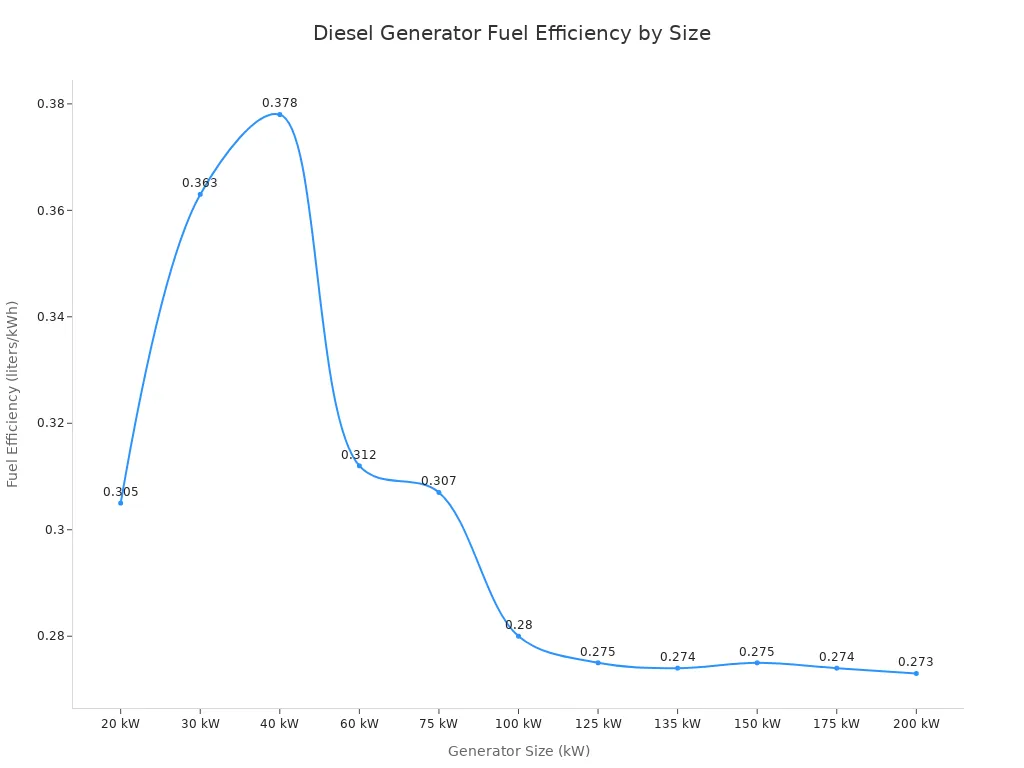
You might think a diesel generator always wastes fuel. Modern generator sets show this is not true. New diesel generator models use less fuel to make the same power. This is called fuel efficiency. Engineers use smart fuel injection, turbochargers, and sensors to help each set burn fuel better. When you run a generator at the right load, you get the best fuel efficiency.
Here is a table that shows how much fuel a modern diesel generator uses at full power:
| Generator Size (kW) | Fuel Consumption (liters/hour) | Fuel Efficiency (liters/kWh) |
|---|---|---|
| 20 | 6.1 | 0.305 |
| 100 | 28.0 | 0.280 |
| 200 | 54.5 | 0.273 |
Modern generator sets also have eco-friendly features. Some sets work with solar panels or batteries. These hybrid generator sets use less fuel and make less pollution. Many generator sets now use digital controls to watch fuel use and fix problems before they waste fuel. Some even use biodiesel or renewable diesel, so they are even cleaner.
Tip: Pick a generator set with good fuel efficiency and smart controls. This will save you money and help the environment.
Some people say diesel generators always cost more to run. This is not always right. The cost depends on many things. It matters how much power you need. It also matters how often you use the generator. Taking care of the generator is important too. Diesel generators use a compression ignition process. This process helps them use less fuel than natural gas generators. Diesel fuel has more energy in each gallon. You get more power from every gallon of diesel.
Diesel generators work well for backup or emergency power. They are made to be most efficient when you need them most. If you pick the right size, you do not waste fuel. New engine technology and smart controls help save even more fuel. You can check the specs to see how much fuel is used.
Here are some main things that change running costs:
Power output and generator size
Fuel prices and how much fuel you use
How often you use the generator for backup or emergencies
Maintenance schedules and the condition of the generator set
Extra features like remote monitoring or sound covers
You want a generator that saves money over time. Diesel generators can help you save in many ways. They use fuel better, especially for backup or emergencies. This means you spend less on fuel each hour. If you keep up with maintenance, you avoid big repairs. Your generator will last longer.
A diesel generator can stop business losses during power cuts. If you have a business, a backup generator keeps things running. This stops you from losing money when the power goes out. For homes, a backup diesel generator gives you peace of mind. It helps during storms or emergencies. Diesel fuel prices can change, but planning ahead helps you stay ready. Storing extra fuel is also a good idea.
Tip: Pick a generator that fits your backup and emergency needs. Get it installed by a pro and keep it serviced. This helps your generator last longer and saves you money.
| Generator Type | Fuel Efficiency | Maintenance Cost | Best Use Case |
|---|---|---|---|
| Diesel Generator | High | Moderate | Standby/Emergency Power |
| Natural Gas Generator | Moderate | Low | Continuous Use |
| Gasoline Generator | Low | High | Short-Term/Emergency |
Some people think diesel generators need a lot of care. This is not true for new generator sets. Today’s diesel gensets work well and are dependable. Companies have made engines and parts much better. These upgrades help the generator run longer without trouble. Diesel engines do not have spark plugs or wires. So, there are fewer things to check or fix. You spend less time and money fixing them than gasoline engines. Diesel fuel does not catch fire as easily. This makes your generator safer to use.
Diesel engines last longer than gasoline engines. They are made for hard work and heavy use. Most generator sets have a warranty for the first year. Some brands give longer warranties, up to five years or more. The warranty can cover the engine, alternator, and controls. If you use your generator for work or important needs, you can get a longer warranty. This gives you extra peace of mind.
Tip: Always follow the maker’s care instructions. This helps your generator stay strong for many years.
You do not need to check your diesel generator every week. Most new generator sets need basic care after 250 to 500 hours of use. For example, AGG says to change oil every 100 to 250 hours. Some engines can go up to 500 hours with special oil. Here is a table that shows when to service popular engines:
| Maintenance Interval | Engine Type | Key Maintenance Tasks |
|---|---|---|
| Every 250 hours | Kubota | Change oil, oil filter, clean air cleaner, check hoses, belts, fuel filter |
| Up to 500 hours | John Deere | Change oil, oil filter, check air intake, battery, cooling system |
You should also check oil and coolant, look at belts, and test the battery often. Most generator sets need a full check once or twice a year. If you do these easy jobs, your generator will work when you need it.
Diesel engines do not need new spark plugs.
You only need to change filters and check fluids.
Diesel generator sets last longer and need less service than gasoline models.
Note: If you skip care, your generator will not work as well and may not last as long. Make a plan for care and follow it for the best results.
Some people think diesel generators are only for factories or big sites. That is not true. Today, you can see diesel generators in homes, shops, offices, and even cabins far away. There are many choices for backup power, no matter what you need.
You may want a standby generator for your house. Home diesel generators are now smaller and quieter. They are also easy to use. Most home models have less than 80 kW of power. These can run your water pump, air conditioner, fridge, and lights if the power goes out. You can pick a portable set or a fixed one. It depends on what you need for backup.
Here are some top brands for home diesel generators:
Caterpillar
Cummins
Generac Power Systems
Kohler
Atlas Copco
FG Wilson
Kirloskar
These brands make good backup and standby options. You can use a generator for short or long power cuts. Many new models have smart controls. This makes them easy to use and saves fuel.
Tip: Make a list of what you want to power in an emergency. This helps you pick the right size generator for your home.
Small businesses also need backup power. Offices, clinics, stores, and phone sites use diesel generators when the grid fails. More than 44% of diesel generator sales are for homes and small businesses. They are not just for big factories. The table below shows how much of the market uses small sets:
| Segment | Market Share (2024) | Typical Use |
|---|---|---|
| Low power gensets (<80 kW) | Over 44% | Homes, small businesses |
| Generators below 75 kVA | 46.8% | Homes, small businesses, telecom |
| Commercial sector | 51.3% | Offices, hospitals, retail centers |
A standby generator helps your business in many ways. It keeps your lights, computers, and security systems on. It protects your data and equipment from sudden power loss. It stops food from spoiling in shops with fridges. It lets you help customers without waiting. It saves money by cutting downtime.
You can find a generator for any business size. The market has units from 5 kVA for small shops to over 1000 kVA for big buildings. Experts can help you pick the right size. You can match your power needs for any backup plan.
Note: Always check your local rules before you buy a standby generator. Make sure you get the right one for your needs.
You have seen that many myths about generator sets are not true. Experts show that a well-maintained set is reliable, quiet, and efficient. Check the table below for common myths and facts:
| Myth | Fact |
|---|---|
| Only for big sites | Sets come in many sizes for homes and businesses |
| High maintenance | Modern sets need simple, regular care |
| Always noisy | New sets use sound covers and mufflers |
You can trust a set to protect your power needs. For the latest advice, look to trusted companies and market research.
You can run most diesel generators for up to 24 hours without stopping. Some large models can run longer if you keep them fueled and check oil levels. Always follow the maker’s guide for best results.
You can use a diesel generator safely at home if you follow all instructions. Place the generator outside to avoid fumes. Many models include safety features like automatic shut-off and alarms for low oil.
You need to add up the wattage of all devices you want to power. Choose a generator that meets or exceeds this total. Experts can help you pick the right size for your needs.
You should check your generator after every 250 to 500 hours of use. Change the oil, inspect filters, and test the battery. Regular care keeps your generator ready for emergencies.


