

Views: 0 Author: Site Editor Publish Time: 2025-12-29 Origin: Site


In industries like construction, disaster relief, and outdoor events, portable lighting is crucial for safety. Light towers provide the necessary illumination, and among the most popular options are diesel and solar-powered units. In this article, we’ll explore the key differences between diesel and solar light towers, focusing on their cost, power, and sustainability. By understanding these factors, you’ll be equipped to choose the best option for your needs.
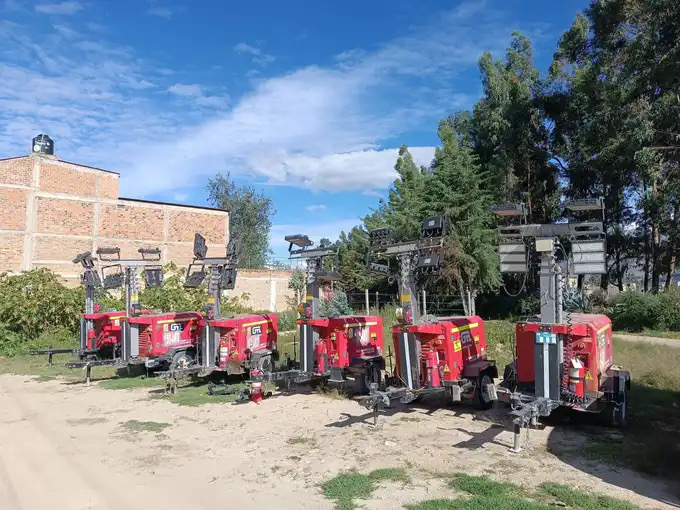
| Feature | Diesel Light Tower | Solar Light Tower |
|---|---|---|
| Initial Purchase Cost | $5,000 - $15,000 | $15,000 - $30,000 |
| Price Variation | Dependent on the model and fuel efficiency | Depends on battery size and solar panel quality |
| Technology Included | Basic diesel engine, minimal technology | Advanced solar panels, energy storage systems |
| Upfront Investment | Lower initial cost | Higher initial cost due to solar technology |
| Fuel Source | Diesel fuel (ongoing cost) | Solar energy (free, no fuel costs) |
Diesel light towers incur significant ongoing costs. These include fuel (which can vary depending on location), regular maintenance (such as oil changes, air filter replacements, and refueling), and other mechanical repairs. Over time, these expenses add up, making diesel-powered light towers more expensive to run in the long term.
In contrast, solar light towers have minimal operating costs after the initial purchase. Since they rely on solar energy, there are no fuel costs, and their maintenance needs are limited to occasional cleaning of solar panels. They require far fewer mechanical parts to maintain compared to diesel units.
Tip: Over time, solar light towers offer substantial savings, making them more cost-effective in the long run despite the higher initial investment.
While the initial investment for solar light towers is higher, they offer a strong return on investment (ROI) within 1-3 years. This is primarily due to the elimination of fuel costs and reduced maintenance requirements. Once the solar light tower is up and running, its operational costs are much lower than that of a diesel-powered tower.
| Feature | Diesel Light Tower | Solar Light Tower |
|---|---|---|
| Power Output | 188,000 - 462,000 lumens | Up to 100 hours of light on a full charge |
| Illumination Intensity | High intensity, suitable for large-scale lighting | Less intense illumination compared to diesel units |
| Ideal Applications | Large construction sites, mining, emergency response | Smaller, sustainable projects with adjustable lighting |
| Performance Dependence | Consistent, unaffected by weather | Affected by weather, may perform less in cloudy conditions |
| Lighting Duration | Continuous as long as fuel is available | Limited by battery storage and sunlight availability |
Tip: Diesel light towers are best for maximum illumination, while solar towers work well for smaller or more sustainable projects where lighting intensity can be adjusted.
Diesel-powered light towers offer excellent performance in any weather, providing continuous illumination regardless of external conditions. This makes them perfect for remote sites and areas where weather conditions may be unpredictable.
Solar light towers, however, depend on sunlight to recharge. During cloudy days or in regions with insufficient sunlight, solar light towers may not perform optimally unless paired with hybrid systems that integrate diesel backup.
Tip: For projects in areas with unpredictable or harsh weather, diesel light towers offer reliability. In contrast, solar towers work best in sunny regions or where sustainability is a key focus.
| Feature | Diesel Light Tower | Solar Light Tower |
|---|---|---|
| Efficiency | Typically 40% efficient, especially at partial load | 90%+ efficiency, using solar energy and LEDs |
| Fuel Usage | Consumes fuel even when light demand is low | Uses stored solar energy efficiently only when needed |
| Energy Waste | High waste, energy is consumed constantly | Minimal waste, energy is stored and used as needed |
| Operational Costs | High due to ongoing fuel consumption | Low, as no fuel is required, and minimal maintenance is needed |
| Environmental Impact | High CO2 emissions, due to fuel consumption | Zero emissions, as it runs on solar power |
| Run Time Efficiency | Runs continuously, even when load is low (wasting fuel) | Efficient, only consumes energy when needed (better for sustainability) |
Tip: If efficiency is a priority, solar light towers offer a significant advantage over diesel units, especially with advanced LED technology.
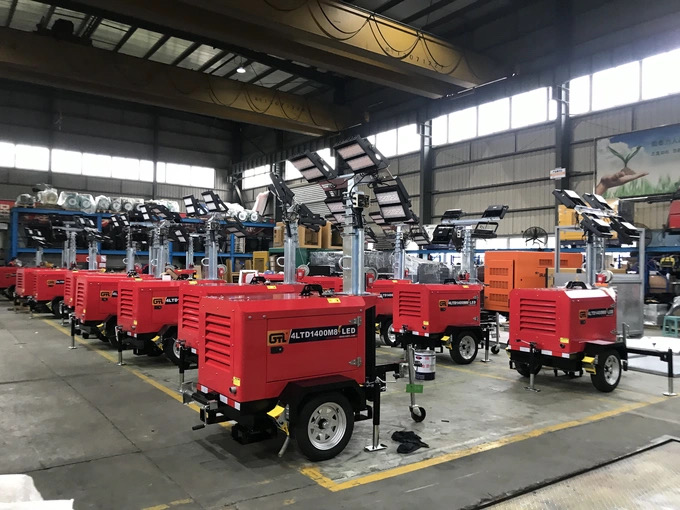
One of the biggest drawbacks of diesel light towers is their environmental impact. These units produce harmful carbon dioxide (CO2) and other pollutants that contribute to climate change. The more the diesel tower runs, the more it adds to the project’s overall carbon footprint.
Solar light towers, however, produce zero emissions. By using renewable solar energy, they offer a cleaner, more sustainable solution for lighting, making them the preferred choice for eco-conscious projects.
Diesel light towers are noisy due to their engines, which can be a disturbance in noise-sensitive environments such as residential areas or near hospitals. This noise can be an issue for projects that need to maintain quiet conditions.
In contrast, solar light towers are virtually silent during operation, making them ideal for use in residential neighborhoods, hospitals, or events that require minimal noise.
Solar energy is a key component of sustainability. Solar light towers support green building initiatives and contribute to a project’s environmental goals by reducing emissions and using renewable energy. As global interest in sustainable practices grows, solar light towers play an important role in meeting green standards.
Diesel light towers are ideal for large-scale projects that require high power and continuous operation, such as:
Construction sites with heavy machinery and large areas.
Mining operations in remote or off-grid locations.
Disaster relief efforts where immediate lighting is crucial.
Tip: Diesel light towers are well-suited for areas with limited access to power or where reliability and brightness are critical.
Solar light towers are best for:
Eco-conscious projects that focus on sustainability.
Remote locations where fuel logistics are difficult or expensive.
Residential areas or sensitive sites that require quiet, emission-free lighting.
Tip: Solar light towers are perfect for long-term deployments in areas where sun exposure is ample and sustainability is a top priority.
Hybrid light towers combine the benefits of solar and diesel power, offering flexibility and efficiency. These units typically use solar power to minimize fuel consumption, with the diesel engine providing backup when necessary.
Tip: For projects that require reliability and high power but also want to reduce emissions and fuel consumption, hybrid light towers offer an optimal solution.
The noise generated by diesel light towers can be a significant concern, particularly in residential or environmentally sensitive areas. These units can disrupt nearby communities and increase noise pollution.
Solar light towers operate silently, ensuring that they are suitable for noise-sensitive environments such as hospitals, residential areas, or events.
Diesel light towers require regular maintenance, including oil changes, refueling, and mechanical repairs. These frequent servicing needs can result in higher labor costs and downtime.
Solar light towers have low maintenance requirements, needing only occasional cleaning of solar panels and battery inspections. This reduces operational downtime and costs.
| Feature | Diesel Light Tower | Solar Light Tower |
|---|---|---|
| Performance in Extreme Environments | Known for durability in snow, rain, and high winds. Reliable for long-term use in harsh conditions. | May struggle in extended cloudy or rainy periods; less reliable in extreme weather. Hybrid models can provide backup with diesel engines. |
| Durability | Rugged design, built for tough conditions, can withstand physical stress. | Fewer moving parts, making them less prone to wear and tear. |
| Maintenance Needs | Requires regular servicing (oil changes, mechanical repairs, refueling) which adds to maintenance costs and downtime. | Minimal maintenance required; mainly cleaning solar panels and occasional battery checks. |
| Service Life | Diesel engines have a finite lifespan and can be shortened by constant use and regular servicing. | Longer lifespan due to fewer moving parts; benefits from ongoing improvements in solar technology. |
| Weather Dependence | Performs well in all weather conditions, including harsh environments. | Dependent on sunlight; performance drops in cloudy or rainy weather unless hybrid or backup systems are used. |
| Long-Term Reliability | Reliable in off-grid and extreme conditions, but ongoing maintenance is needed to ensure long-term performance. | More reliable in low-maintenance environments, but performance can be inconsistent in extreme weather without backup. |
Tip: For extreme environments or areas with unpredictable weather, diesel light towers offer more reliability and consistent performance. If you're seeking long-term reliability with minimal maintenance, solar light towers offer a longer service life and lower maintenance needs.
When comparing diesel generator light towers and solar light towers, both offer unique benefits. Diesel light towers are ideal for high power and rugged environments but come with higher long-term costs and environmental impact. On the other hand, solar light towers are more cost-effective in the long term, offering zero emissions, low operational costs, and quiet, eco-friendly operation, though they require a higher upfront investment. Hybrid models, combining solar power and diesel backup, provide the best of both worlds. By carefully considering factors like budget, power, and environmental impact, businesses can make an informed choice. Xiamen GTL Power System Co., Ltd. offers innovative, reliable solar and hybrid light towers, providing value and efficiency for a wide range of applications.
A: The main difference is that diesel light towers rely on fuel and offer high power output, while solar light towers use renewable solar energy and are more cost-effective over time.
A: A diesel light tower typically costs between $5,000 and $15,000, depending on the model and features.
A: Yes, solar light towers produce zero emissions and are eco-friendly, making them a more sustainable option compared to diesel units.
A: Solar light towers generally have a longer lifespan due to fewer moving parts, lasting many years with minimal maintenance.


