

Views: 0 Author: Site Editor Publish Time: 2026-09-23 Origin: Site


Improper generator sizing introduces a massive dual risk for logistics operators. Undersize the unit, and you face catastrophic cargo loss from a broken cold chain. Oversize it, and you burn excess fuel while needlessly reducing your maximum payload capacity. Logistics teams heavily favor underslung gensets. They improve weight distribution. They also enhance aerodynamics on container chassis. However, these units require precise specification matching to perform reliably. You cannot rely on guesswork.
This guide provides a strict operational framework. Logistics operators and procurement teams will learn how to calculate exact power needs. We will cover runtime variables and critical chassis compatibility requirements. You will walk away with a clear blueprint for optimal equipment selection.
Incorrect equipment selection directly harms fleet operational margins. Proper underslung reefer generator sizing prevents compounding failures during transit. Fleet managers must understand the physical risks of poorly matched units.
Oversizing creates several immediate operational burdens. Excess tare weight directly reduces your allowable cargo payload. Highway weight limits remain strictly enforced across most jurisdictions. Every extra pound of oversized generator hardware eliminates a pound of revenue-generating freight. Furthermore, running an oversized engine under light loads creates significant mechanical problems. The engine fails to reach optimal operating temperatures. This condition leads to wet stacking. Unburned fuel accumulates in the exhaust system. Wet stacking degrades engine life and causes severe emission compliance failures.
Undersizing presents an even more immediate threat to freight integrity. Refrigeration compressors require massive power spikes to start. If the genset cannot handle this surge, voltage drops occur rapidly. The compressor fails to engage. The generator control panel registers a fault code. The entire unit shuts down. Drivers often remain unaware of this failure until they reach the destination. The resulting cargo spoilage destroys client trust and triggers massive insurance claims.
Success requires meeting three specific criteria. A successfully sized unit maintains setpoint temperatures uninterrupted across maximum route durations. It fits the existing chassis fleet seamlessly. Finally, it optimizes fuel consumption per hour without risking power loss.
Engineers differentiate strictly between starting wattage and running wattage. A refrigeration compressor draws relatively low power while maintaining temperature. However, initiating the cooling cycle requires a massive electrical surge. A compressor might draw three to four times its running wattage upon startup. You must size the alternator to handle this brief but intense surge. Failing to account for starting watts guarantees system shutdown.
Load variables also dictate baseline power needs. Deep-frozen loads operate at -20°C or lower. These profiles require continuous, heavy compressor cycling. Chilled loads demand less frequent cycling. Multi-temperature zones represent the highest complexity. Multi-temp containers utilize separate evaporators for different compartments. The generator must handle staggered startup surges if multiple evaporators engage simultaneously.
Best Practices for Power Sizing:
Autonomous operation represents the primary goal for underslung units. You must map route durations against standard fuel consumption rates. Typical units consume diesel measured in liters or gallons per hour. Load profiles heavily influence this burn rate. A unit cooling deep-frozen cargo in a hot desert burns significantly more fuel than a unit hauling chilled produce in winter.
Fleet managers must evaluate standard tank sizes. Manufacturers typically offer tanks ranging from 50 gallons to 130 gallons. A larger tank extends autonomous runtime. It prevents drivers from needing specialized reefer fueling stops. However, larger tanks introduce a severe weight penalty. A full 130-gallon tank adds over 900 pounds of liquid weight to the chassis. You must balance the need for autonomous range against strict highway axle weight restrictions.
Common Mistakes in Runtime Projections:
Physical dimensional constraints dictate underslung mounting success. The generator must nest securely beneath the chassis I-beams. Clearances remain extremely tight. Engineers must measure the exact width between the chassis main beams. The unit must slot perfectly into this void without rubbing against structural cross-members.
Ground clearance presents another critical challenge. Low-hanging units face physical destruction during transit. Dock approaches often feature steep inclines. Rail yard transfers involve aggressive lifting mechanisms. If a unit hangs too low, it will drag on pavement or suffer impact damage during intermodal lifts. Fleet managers must specify proper mounting hardware. Pin-mount systems offer quick installation for specific chassis designs. Clamp-mount systems provide greater versatility across mixed fleets.
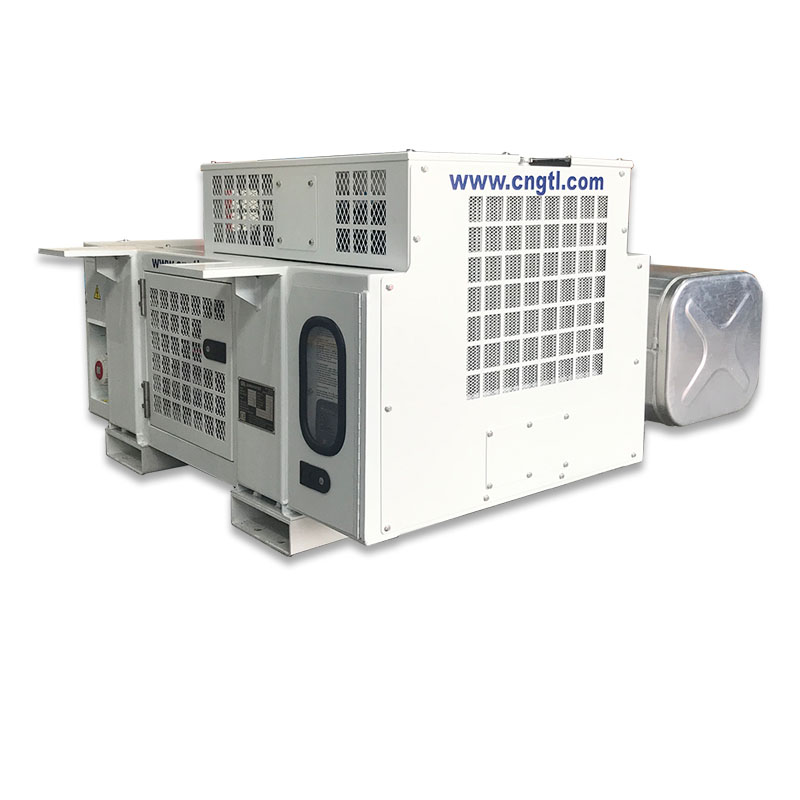
The logistics industry standardizes heavily around a specific power tier. A 15kW underslung reefer generator serves as the default baseline for standard ISO 40ft high-cube containers. This power rating provides the exact sweet spot. It handles aggressive compressor surges safely. It avoids the wet stacking risks associated with larger 20kW units. Most major container leasing companies specify 15kW as their absolute standard.
Reliability stems from specific component pairings. Tier-compliant diesel engines serve as the primary prime movers. These engines feature low-speed, high-torque characteristics. Manufacturers pair them directly with heavy-duty brushless alternators. Brushless designs eliminate wearable parts. They provide cleaner, more stable sine waves. This clean power protects sensitive solid-state microprocessors inside the container's refrigeration controller.
Proper underslung reefer generator sizing requires knowing when to deviate from the baseline. Some environments render 15kW insufficient. Extreme high-ambient temperatures degrade engine output. Operating at high altitudes starves engines of oxygen. In these harsh environments, you must apply altitude and temperature derating formulas. A standard 15kW unit might only produce 12kW at 10,000 feet of elevation. Conversely, a 15kW unit might prove excessive for small domestic routes hauling strictly chilled goods in 20ft containers.
| Container Size | Cargo Type | Typical Genset Output | Primary Risk Factor |
|---|---|---|---|
| 20ft Standard | Chilled Produce | 10kW - 12kW | Oversizing causing engine wet stacking |
| 40ft High-Cube | Mixed / Multi-Temp | 15kW | Improper tank sizing for route length |
| 40ft High-Cube | Deep Frozen (-20°C) | 15kW (High Surge Alternator) | Compressor startup voltage drops |
| 53ft Domestic | Deep Frozen (-20°C) | 18kW - 20kW | Chassis clearance and payload weight limits |
Transit realities subject underslung generators to brutal mechanical punishment. Road vibration degrades internal components relentlessly. Rail humping presents an even more violent threat. When trains connect railcars, the impact sends massive shockwaves through the chassis. Standard industrial generators shatter under these forces. Underslung units require heavy-duty shock mounts. Manufacturers utilize specialized elastomeric isolators to absorb impact energy. Reinforced steel frames prevent the unit from twisting during extreme chassis flex.
Climate factors dictate true operational efficiency. Engineers utilize climate derating frameworks to ensure safety. Extreme heat thins the air, reducing engine combustion efficiency. Desert operations require specialized airflow routing to prevent overheating. Cold weather introduces fuel gelling risks. Operators must specify block heaters and fuel warmers for winter routes. Ignoring climate variables guarantees system failure when you need power the most.
Corrosion destroys equipment faster than mechanical wear. Intermodal chassis operate in highly corrosive environments. Ocean transits expose units to constant sea spray. Winter road operations cover the equipment in de-icing salts. Standard paint offers zero protection. Operators must demand marine-grade anti-corrosion coatings. Look for units meeting C5-M marine environment standards. These multi-layer epoxy coatings protect the steel frame and vital electrical connections from rapid oxidation.
Procurement teams must evaluate vendors using a features-to-outcomes framework. Specifications alone mean nothing. You must connect every feature to a tangible operational benefit. Smart controllers represent a non-negotiable requirement. Modern controllers feature auto-start and auto-stop capabilities. They cycle the engine based on cargo temperature demands. This saves massive amounts of fuel. Telematics integrations allow remote temperature monitoring. Dispatchers can see fuel levels and fault codes in real-time. This prevents blind failures where drivers arrive with spoiled cargo.
Maintenance accessibility dictates long-term fleet uptime. Mechanics hate servicing poorly designed underslung units. If a mechanic must remove the unit from the chassis to change the oil, labor hours skyrocket. Demand bottom and side access panels. Mechanics must reach oil drains, fuel filters, and air intake elements easily. Quick-service designs keep chassis moving instead of trapped in maintenance bays.
Environmental compliance remains mandatory across North America and Europe. You cannot deploy non-compliant engines. Verify EPA Tier 4 Final certifications for US operations. California routes strictly require CARB compliance. Failing to meet these regulations results in massive fines and grounded equipment. Verify ISO quality manufacturing standards to ensure consistent build quality across bulk orders.
Before issuing a purchase order, take specific verification actions. Do not rely on marketing brochures. Request specific load-bank testing data from the manufacturer. Demand fuel-consumption curves mapped against varying loads and ambient temperatures. This empirical data separates reliable manufacturing partners from substandard suppliers.
Effective generator sizing requires strict mathematical discipline. You must balance the physical thermal load against maximum route durations and exact chassis mechanics. Never treat generator procurement as a minor accessory purchase. The right specification protects your freight, optimizes fuel burn, and maximizes allowable payload.
Start your procurement process by auditing your existing chassis fleet dimensions. Map your typical freight temperature profiles and extreme climate exposures. Demand empirical testing data from vendors. Match your operations to the industry standard 15kW baseline unless your specific route demands a calculated deviation. Rigorous upfront analysis guarantees long-term cold chain integrity.
A: A standard 15kW unit typically consumes between 0.7 to 1.1 gallons of diesel per hour. This rate fluctuates based on the ambient temperature, the cargo setpoint, and the age of the container's insulation. Deep-frozen cargo in hot climates pushes consumption toward the higher end.
A: Yes. The combined weight of the generator hardware and a full fuel tank directly subtracts from your legal highway payload limit. A standard unit with a full 50-gallon tank adds approximately 1,600 pounds to your chassis tare weight. You must factor this into freight limits.
A: No. While manufacturers design them for broad compatibility, you must verify specific I-beam spacing. Certain specialized or older chassis designs lack the necessary width or ground clearance. Always measure your fleet's beam configurations and specify correct pin-mount or clamp-mount hardware.
A: Power output remains generally identical between the two styles. However, underslung units shift the center of gravity downward and improve weight distribution across the axles. They also free up turning radius space behind the truck cab, which nose-mount units often restrict.


