

Views: 0 Author: Site Editor Publish Time: 2025-12-19 Origin: Site


Light towers play a key role in ensuring safety and productivity in low-light conditions. Whether on construction sites or at outdoor events, they provide crucial illumination after hours. In this article, we will explore the different types of light towers, including diesel, electric, solar, and hybrid models. You’ll learn about their advantages, applications, and how to select the right one for your needs.

Diesel-powered light towers are the most common type, utilizing a diesel engine to generate power for illumination. They are ideal for remote locations where access to electricity is unavailable. Diesel light towers are self-sufficient, often equipped with a fuel tank that powers the unit for extended periods, making them highly reliable.
Reliability: Diesel-powered light towers are known for their dependable performance in harsh conditions. They can operate in remote areas and are less affected by weather or power grid issues.
Long Runtime and Brightness: These units offer a long runtime and are capable of providing intense lighting. Some models can run for 60-100 hours on a single fuel tank, making them suitable for large-scale projects or extended work hours.
Tip: When working in remote locations, diesel-powered light towers are often the best choice due to their reliability and independence from external power sources.
Fuel Consumption and Operating Costs: While the upfront cost of diesel-powered light towers is often lower than hybrid or solar models, their ongoing fuel consumption can add up, increasing long-term operational costs.
Environmental Impact and Noise: Diesel light towers are the least environmentally friendly due to their fuel use and emissions. They also tend to be noisy, which may be an issue in noise-sensitive areas.
Electric light towers are powered by an external power source, typically grid electricity or a generator. These towers are often used in environments where access to electrical outlets is readily available. They are quieter and more energy-efficient than their diesel counterparts, making them suitable for urban construction sites or indoor uses.
Quiet Operation and Low Emissions: Electric light towers do not rely on fuel, which makes them much quieter than diesel-powered models. They also produce zero emissions during operation, making them an environmentally friendly choice.
Cost-Efficiency: When connected to grid power, electric towers can be much cheaper to run than diesel-powered models, particularly in areas with low electricity rates.
Dependency on a Stable Power Source: These light towers are limited to areas with access to electricity, making them unsuitable for remote sites where grid power is unavailable.
Limited Mobility: Without battery backup, electric light towers are less mobile than other models. The need for a constant power connection can make them cumbersome in some settings.
Tip: If your project is near a power grid or requires continuous operation indoors, electric light towers offer a quiet and cost-effective solution.
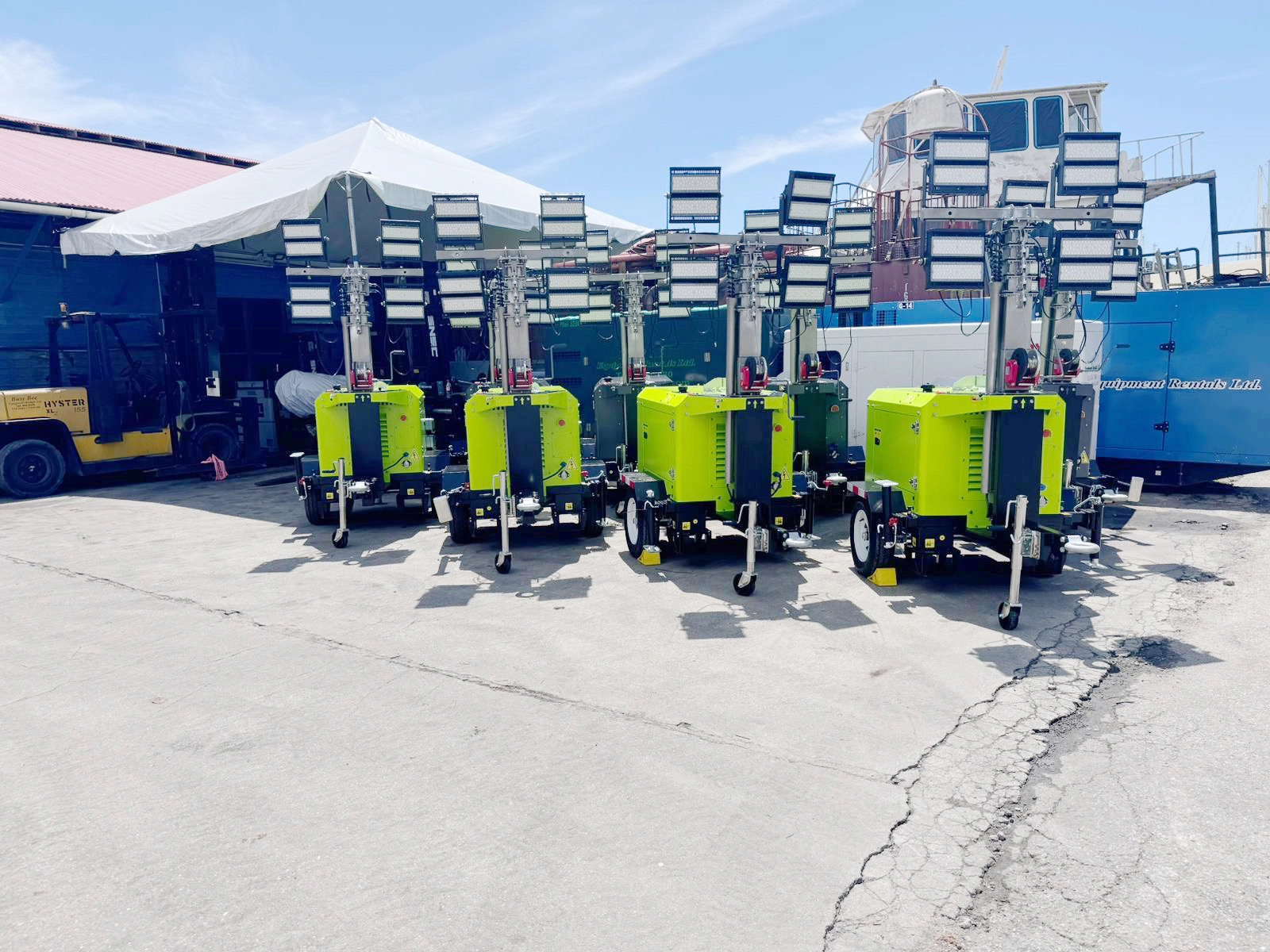
Solar-powered light towers utilize photovoltaic panels to capture the sun’s energy, which is then stored in batteries for later use. These towers are highly eco-friendly, producing zero carbon emissions, making them an excellent choice for sustainable projects. They are particularly effective in areas with consistent sunlight, offering low operational costs and minimal maintenance. By relying on renewable energy, solar-powered light towers contribute to reducing the environmental footprint of outdoor projects.
Zero Fuel Consumption and Carbon Emissions: Solar-powered models run on renewable energy, requiring no fuel. This not only reduces operational costs but also makes them the most environmentally friendly option available.
Minimal Maintenance: Solar light towers require little maintenance compared to diesel and hybrid models since they don’t have a motor or fuel system.
Limited Performance in Poor Weather: Solar-powered towers rely on sunlight for energy. Cloudy days or nighttime operations can limit their performance, requiring additional charging or backup power sources.
Higher Initial Cost: Although operational costs are low, solar-powered light towers typically have a higher upfront purchase cost compared to other types, which could offset savings in the long term.
Tip: For projects in sunny locations or those focused on sustainability, solar-powered light towers are an excellent option, especially when running costs are a concern.
Hybrid light towers combine multiple power sources, typically diesel and solar or electric. These towers automatically switch between energy sources based on availability, allowing for more efficient use of resources. Hybrid models offer flexibility for projects that need continuous illumination while minimizing fuel consumption.
Reduced Fuel Costs and Lower Emissions: By switching to solar or battery power during the day, hybrid light towers can significantly reduce fuel consumption and greenhouse gas emissions.
Extended Runtime and Flexible Operation: These units can operate for longer periods than diesel-only models, offering a balance of power from multiple sources. They are ideal for locations with intermittent access to sunlight or grid power.
Higher Upfront Costs: The added complexity of hybrid systems can make these light towers more expensive to purchase or rent.
Maintenance Considerations: Hybrid systems require maintenance for both the diesel engine and the solar or battery system, which may result in higher long-term service costs.
Tip: Hybrid light towers are perfect for projects that prioritize sustainability without sacrificing performance. They balance fuel efficiency with the need for reliable illumination.
| Factor | Consideration | Recommended Light Tower Type |
|---|---|---|
| Power Source | Choose based on the availability of electricity and your project’s mobility needs. | Diesel, Electric, Solar, Hybrid |
| Coverage Area and Brightness | Ensure the light tower provides enough illumination for your site. Brightness is measured in lumens, and the correct level is vital for safety. | All Types (Check lumens specification for coverage) |
| Noise Levels and Portability | Consider noise sensitivity and mobility requirements. For quiet operation, electric or solar-powered towers are best. For portability, hybrid or diesel units are more flexible. | Electric, Solar (for quiet sites); Hybrid, Diesel (for portability) |
| Factor | Consideration | Recommended Light Tower Type |
|---|---|---|
| Indoor vs. Outdoor Usage | Electric light towers are ideal for indoor or urban settings with grid power. Diesel or solar-powered towers are more suitable for outdoor or remote locations. | Electric (indoor/urban); Diesel, Solar (outdoor/remote) |
| Environmental Considerations | Weather conditions and regulations influence tower choice. Solar is best for sunny climates, while hybrid towers are versatile in varied environments. | Solar (sunny climates); Hybrid (flexible for diverse conditions) |
Tip: Always assess your site’s lighting needs, including weather and location, to choose the most efficient and suitable light tower.
Light towers are crucial on construction sites, especially for night shifts or areas with insufficient natural light. They ensure workers have adequate visibility, which is essential for both safety and productivity. By providing reliable illumination, light towers reduce the likelihood of accidents, allowing for a safer working environment even after dark. They also help maintain project timelines by enabling work to continue during hours with limited daylight.
In emergency situations or natural disasters, light towers are indispensable for rescue and recovery operations. They provide essential lighting in areas where there is no power, allowing rescue teams to work safely and efficiently. Whether it’s searching for survivors or conducting damage assessments, light towers ensure visibility, improving response time and helping to mitigate further risks to both responders and victims. Their portability makes them an ideal tool in crisis zones.
For outdoor events such as festivals, concerts, and sports matches, light towers provide critical visibility and safety. These portable lighting solutions are designed to illuminate large areas, making nighttime activities more enjoyable and secure. Light towers allow organizers to extend event hours, ensuring attendees can see clearly and safely navigate the venue. They are particularly useful for large crowds, ensuring that every corner of the event is well-lit and accessible to all.
Tip: For events with large crowds or outdoor activities, ensure your light towers provide adequate coverage and are equipped for quick setup to avoid delays and ensure smooth operations.
Light towers are critical for ensuring safety, productivity, and visibility in low-light environments. Whether for construction, emergency response, or outdoor events, choosing the right light tower is vital for optimal performance. Diesel, electric, solar, and hybrid light towers each offer unique benefits tailored to various project needs and conditions. By understanding the distinct advantages of each type, you can make a well-informed decision based on your budget, environmental factors, and operational requirements. Xiamen GTL Power System Co., Ltd. offers high-quality, reliable light towers, providing durable and energy-efficient solutions for your lighting needs.
A: The main types of light towers are diesel-powered, electric, solar-powered, and hybrid. Each type has its own advantages depending on the power source, environmental considerations, and project needs.
A: Solar-powered light towers use photovoltaic panels to capture sunlight, storing energy in batteries to power the lights. They are eco-friendly and ideal for areas with abundant sunlight.
A: Electric light towers are cost-efficient, quiet, and produce zero emissions. They are ideal for urban areas with access to grid power and require minimal maintenance.
A: Hybrid light towers combine diesel and solar or battery power, offering flexibility, reduced fuel consumption, and lower emissions. They are perfect for diverse environments and longer runtimes.
A: Diesel-powered light towers can typically run for 60-100 hours on a full tank, depending on the model and fuel efficiency.


