

Views: 0 Author: Site Editor Publish Time: 2026-09-26 Origin: Site


For commercial and industrial (C&I) facilities, a battery energy storage system represents a significant capital expenditure. Project return models rely heavily on projected uptime. They also depend on steady capacity retention. Unplanned downtime and thermal degradation can quickly destroy project economics. Premature cell aging is another major threat to your bottom line. Standard "break-fix" approaches void warranties instantly. They also create serious safety hazards on site. Moving from reactive repairs to a structured, lifecycle-based maintenance strategy is non-negotiable. It ensures system viability for years to come. This article provides a transparent, evidence-based framework. You will learn how to evaluate maintenance protocols effectively. We explore hidden operational expenses and maintenance gaps. You will discover how to select systems designed strictly for long-term reliability. We aim to equip you with the knowledge to protect your storage investments.
Proactive > Reactive: Routine preventative maintenance (HVAC, connections) combined with predictive BMS data prevents 80%+ of unplanned outages.
Maintainability by Design: Hardware accessibility and modularity must be evaluated in your initial container BESS specifications to control future OPEX.
The Remote Illusion: While remote monitoring is critical, it contains hidden costs (false alarms, cyber-maintenance) and does not replace the need for localized, on-site physical inspections.
Supplier Accountability: A credible container BESS supplier provides transparent API access for predictive analytics, clear warranty maintenance requirements, and localized service networks.
You cannot achieve long-term profitability without meticulous maintenance. We define operational success through strict, measurable criteria. High uptime percentages sit at the top. You must also adhere tightly to warranty stipulations. Preserving round-trip efficiency (RTE) ensures your system performs economically. Finally, achieving zero safety or thermal events is mandatory.
The financial impact of neglect is staggering. You can contrast the low cost of scheduled maintenance against catastrophic failures. A routine filter change costs very little. An emergency cell replacement costs tens of thousands of dollars. Fire suppression deployment halts your operations completely. It demands extensive cleanup and recertification. Proactive care eliminates these exponential risks.
Warranty compliance introduces harsh realities. Most Tier-1 battery cell warranties are strictly contingent on standard logs. You must prove you maintained strict operating temperature controls. If a single container bess overheats due to a clogged air filter, the manufacturer can void your coverage. Comprehensive maintenance logs protect your warranty rights.
A robust maintenance program relies on three interconnected tiers. Preventative maintenance uses time-based schedules. It requires physical inspections. Technicians focus on visual degradation. They perform critical torque checks on busbars. They also handle basic filter replacements. These steps stop small physical issues from escalating.
Predictive maintenance uses condition-based monitoring. You utilize Battery Management System (BMS) data. We track micro-voltage deviations across individual cells. We monitor the State of Health (SoH) continuously. We look for thermal anomalies to predict failures early. Catching a cell variance before it triggers an alarm saves substantial downtime.
Corrective maintenance addresses event-based failures. When a component fails, you need protocols for safe repairs. Technicians isolate the fault immediately. They lock out power to protect personnel. They replace the damaged part swiftly.
These tiers apply differently across various system scales. For instance, maintaining a reliable 200 kwh 3 phase bess for C&I peak shaving requires specific localized attention. The dispatching cycles are frequent. In contrast, utility-scale multi-megawatt installations demand massive data aggregation. However, the core maintenance philosophy remains identical regardless of size.
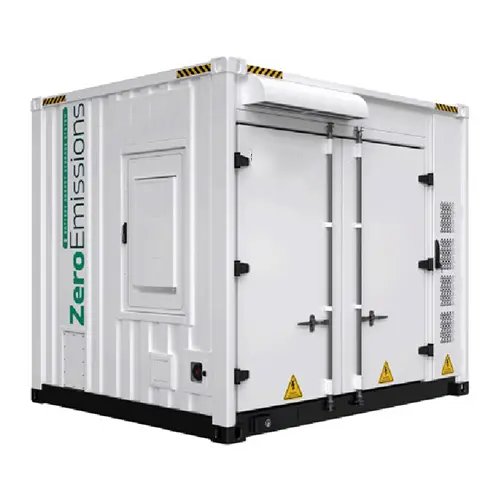
Lifecycle maintenance demands a structured approach. You must inspect diverse subsystems continuously. Missing just one critical component jeopardizes the entire site.
This is the most frequent point of failure. Batteries generate immense heat during cycling. You must check coolant levels meticulously. Technicians need to replace air filters regularly. Verifying compressor efficiency is vital. Failing to maintain HVAC systems leads directly to thermal runaway.
The battery racks are your core assets. You must verify cell balancing regularly. Inspect the modules for any physical swelling. Swelling indicates dangerous internal gas generation. Ensure torque on DC connections remains tight. Loose connections cause micro-arcing. Arcing creates extreme localized heat and fire risks.
Inverters handle the heavy lifting. Technicians must inspect the Insulated-Gate Bipolar Transistors (IGBTs). They generate significant heat and require clean heatsinks. Clean out all dust ingress. Dust traps heat and shorts circuit boards. Finally, verify AC/DC isolation parameters. This prevents ground faults.
You cannot compromise on fire safety. Conduct annual NFPA-compliant testing. Test smoke and heat detectors thoroughly. Verify that aerosol or gas release mechanisms arm correctly. Check the emergency stop (E-stop) functionality. Fast shutdowns save lives and equipment.
Table: Recommended Maintenance Intervals for Core Subsystems
Component Subsystem | Maintenance Task | Recommended Frequency |
|---|---|---|
HVAC & Cooling | Filter replacement & coolant level check | Quarterly |
Battery Racks | Torque checks & visual swelling inspection | Bi-Annually |
PCS / Inverters | Dust removal & isolation parameter check | Bi-Annually |
Fire Suppression | Detector testing & E-stop verification | Annually |
BMS & Firmware | Data log analysis & security patch updates | Monthly |
The industry pushes heavily for remote maintenance. Many operators believe software can solve everything. We must acknowledge this "remote-first" blind spot. Remote monitoring is entirely necessary. However, sensors have strict limitations. They cannot detect physical casing damage. They will not spot slow coolant micro-leaks until fluid levels drop dangerously low.
Data latency and false positives create major operational drains. An uncalibrated sensor might flag a thermal anomaly. You dispatch a technician urgently. They drive three hours to the site. They find nothing wrong. This false positive wastes labor budgets quickly. Over-reliance on remote alarms inflates service costs.
Software and cyber maintenance are also hidden burdens. You must budget for routine firmware updates. Patch management requires dedicated IT hours. Securing remote access gateways is vital. Hackers target energy infrastructure frequently. Operators often overlook these cyber tasks in their initial operational forecasts. You must account for them.
Physical design impacts your long-term maintenance costs. You should evaluate features based on their operational outcomes. Poor design choices inflate labor hours. Excellent design streamlines routine service.
Modularity and hot-swappability are paramount. Can you bypass individual battery modules? Can you swap an inverter block quickly? You should be able to replace parts without taking the entire container BESS offline. High modularity ensures higher operational uptime. It reduces the impact of isolated failures.
Access and ergonomics dictate labor efficiency. Evaluate walk-in versus non-walk-in container designs. Walk-in designs provide shelter for technicians. They allow easier part replacements. In tight, non-walk-in designs, critical components might be hidden. Technicians might need specialized rigging to replace a basic part. Review your container BESS specifications to ensure adequate clearance.
BMS data granularity dictates your predictive power. Does the system provide open data access? You want third-party predictive analytics integration. Avoid operators locked into a proprietary black box. You need transparent data architectures. This allows you to audit degradation independently. It keeps your service providers honest.
Selecting the right partner is just as important as the hardware. You must evaluate Service Level Agreements (SLAs) closely. Look for guaranteed response times. Scrutinize their parts availability. Consider the proximity of their service network. A supplier located a thousand miles away cannot resolve emergencies quickly.
Documentation and training define long-term success. A trustworthy container BESS supplier provides exhaustive Operations & Maintenance (O&M) manuals. They deliver clear commissioning baselines. You need these baselines to prove warranty claims later. They must also provide safety training for your local facility staff.
You need a concrete next-step action plan. Build a framework for the RFP stage. Request detailed maintenance schedules upfront. Ask for comprehensive spare parts lists. Demand to see the warranty exclusion clauses before signing. Understanding these exclusions prevents costly surprises.
Reliability is never inherent to lithium-ion chemistry. Manufacturers engineer reliability through rigorous, continuous maintenance. You must actively manage thermal loads, connections, and software patches.
Procurement teams need to shift their perspective. Stop comparing simply upfront capital costs per kilowatt-hour. Instead, evaluate the total lifecycle operational expenses dictated by system maintainability. A cheaper system with poor access will cost more over ten years.
We highly recommend mandating a detailed O&M plan immediately. Require a transparent data architecture before finalizing any contract. Taking these proactive steps secures your investment. It guarantees safe, profitable energy storage operations.
A: You must maintain documented temperature control logs continuously. Warranties require scheduled HVAC servicing to prove the environment remains stable. Certified technician interventions are mandatory for major electrical work. Using uncertified staff or skipping bi-annual torque checks often voids the manufacturer warranty immediately.
A: Standard industry practice demands comprehensive annual inspections. However, for high-cycle commercial and industrial applications, you should perform bi-annual checks. High-use systems stress thermal and electrical components faster. Frequent visual checks catch micro-leaks and dust buildup early.
A: Yes, but only for basic tasks. Your facility staff can perform visual inspections. They can check perimeter security and change external HVAC air filters. However, high-voltage torque checks, internal module replacements, and BMS firmware updates strictly require certified integrators or manufacturer technicians.


