

Views: 0 Author: Site Editor Publish Time: 2026-09-14 Origin: Site


Accepting a generator based solely on marketing brochures or nameplate claims can lead to catastrophic power failures during peak demand. Facility managers often face a harsh reality during an emergency. The equipment shuts down. It overheats. It fails to support critical loads. Why does this happen? A massive gap exists between theoretical laboratory ratings and real-world site performance.
Manufacturers test units under ideal environmental conditions. Your actual site conditions will almost certainly differ. Altitude, humidity, and ambient heat severely restrict actual engine output. You cannot afford to discover these limitations during a live power outage. You need absolute certainty before you sign the final handover documents.
This article provides a strict, evidence-based inspection framework. We will show you exactly how to validate true power output before final payment. You will learn to verify testing documents, demand physical load tests, and ensure full compliance. Protect your infrastructure by holding vendors accountable to real-world operational data.
Relying on surface-level metrics creates severe operational risks. Many buyers read a nameplate and assume the machine will deliver that exact number indefinitely. This mistake leads directly to under-sizing. When you under-size equipment, you risk sudden voltage drops, tripped breakers, and permanent alternator damage. We must look beyond the sticker.
You must understand strict operational rating categories. The industry defines power capacities in three main tiers. Standby power supports varying loads during emergency outages for limited annual hours. Prime power runs continuously for unlimited hours, but the load must fluctuate. Continuous power supplies a constant, unwavering load for unlimited hours. You cannot run a standby unit in a prime application. It will quickly fail.
Real-world conditions actively diminish output capacity. We call this phenomenon "derating." Engines need dense, cool air to burn fuel efficiently. Extreme heat expands the air. High altitude reduces oxygen density. Enclosures often restrict proper airflow. These physical realities force engines to work harder. A unit rated for 500kW at sea level might only produce 430kW in a hot, high-altitude environment. You must account for this physics before acceptance.
A successful inspection proves physical capability. The equipment must handle specific facility load steps. We define success simply. The machine accepts sudden heavy loads without unacceptable voltage or frequency drops. It recovers quickly. It maintains stable engine temperatures. If it fails these basic stress tests, you must not accept the handover.
You need a rigorous physical testing framework prior to acceptance. Administrative checks are never enough. We mandate specific inspection protocols to validate generator rated power specifications before you release final payment.
Begin with a comprehensive visual and mechanical inspection. Do not assume the delivered unit matches the engineering drawings.
Next, you must demand proper load bank testing. A simulated load test is non-negotiable. It proves the engine and alternator function as a unified system under extreme stress. Mandate a multi-step load test. Typical protocols require stepping the load from 25% up to 100% of the rated capacity.
Common Load Bank Testing Steps
Table: Critical Metrics to Track During Load Bank Testing
| Metric | Acceptable Behavior | Warning Signs |
|---|---|---|
| Oil Pressure | Steady within manufacturer range | Sudden drops under heavy load |
| Coolant Temp | Rises safely and plateaus | Continuous climbing; boiling |
| Frequency (Hz) | Stable at 50Hz or 60Hz | Hunting, surging, or sagging |
| Voltage | Holds steady after load application | Sustained drop outside tolerance |
Finally, measure transient response. We need to know how quickly the unit recovers its rated voltage and frequency. When you apply a heavy block load, the power dips temporarily. A healthy system detects this dip. The governor injects more fuel. The automatic voltage regulator (AVR) increases excitation. The system should stabilize within seconds. Slow recovery indicates undersized components or poor tuning.
Specialized use cases require much stricter power validation than standard backup scenarios. Standard office buildings might tolerate minor frequency dips during an outage. Industrial applications cannot. You must adapt your testing framework to match your unique operational realities.
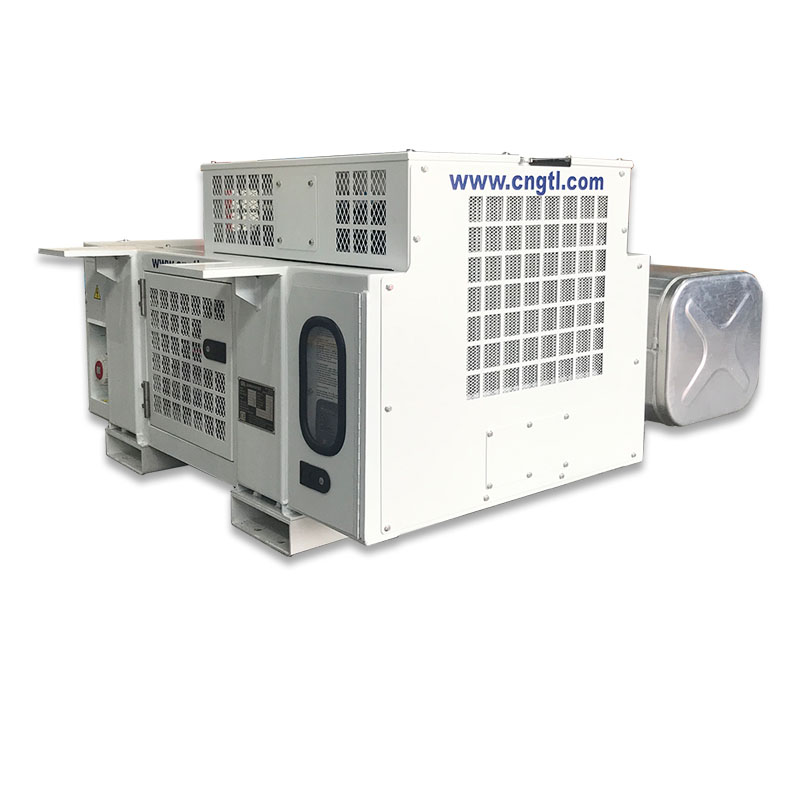
Consider the demands of cold chain logistics. Transporting perishable goods requires an unbroken power supply. Temperature fluctuations ruin inventory instantly. You must analyze the specific continuous-duty cycles required here. For example, a 15kw 60hz 4tnv88 underslung reefer generator operates in uniquely hostile environments. It faces constant road vibration, extreme ambient weather, and relentless demand.
Refrigeration units demand massive starting transient capacity. Compressors require high inrush currents to start their motors. This current spike can easily stall a poorly validated engine. Furthermore, you need continuous 60Hz stability. Sensitive compressor motors overheat and fail if the frequency drops or fluctuates. You must test the generator using inductive loads that mimic these harsh compressor start-ups.
When inspecting a diesel generator for heavy-duty applications, evaluate the fuel consumption rates. Check these rates at full load during testing. Ensure they align with the promised efficiency specs. Additionally, check for "wet stacking" risks. Wet stacking occurs when an engine runs at very light loads. Cylinder temperatures drop too low to burn fuel completely. Unburned diesel accumulates in the exhaust system. This ruins the engine over time. If your facility plans to run the unit at low loads frequently, you must install a permanent load bank to prevent wet stacking.
Power acceptance is deeply tied to industry compliance and safety standards. You must manage risk by adhering to recognized frameworks. In North America, standards like NFPA 110 dictate exact performance requirements for emergency and standby power systems. The National Electrical Code (NEC) governs safe installation practices. Environmental Protection Agency (EPA) emissions standards dictate legal exhaust limits. You must verify these compliance markers.
Best Practices for Control Panel Checks:
Assess integration risks carefully. A perfect generator is useless if it cannot interface with your building. Check the Automatic Transfer Switch (ATS) compatibility. The ATS must recognize the generator's signal and transfer the load safely. Verify phase rotation. Connecting mismatched phases will instantly destroy rotating equipment inside the facility. Ensure your facility’s electrical infrastructure features adequate breaker sizing to receive the stated power output safely.
You must establish non-negotiable deliverables from vendors before official acceptance. Do not sign the final handover documents until you receive every piece of required evidence. Hold your generator rated power supplier accountable to the initial contract terms.
Demand complete, formal documentation. You need certified Factory Acceptance Testing (FAT) or Site Acceptance Testing (SAT) reports. A qualified testing engineer must sign these documents. Ensure they detail the exact unit serial number. Do not accept generic model test reports. You also need Operations & Maintenance (O&M) manuals specific to your tested build. Generic manuals often omit custom enclosure details or specific telemetry wiring diagrams.
Ensure warranty and SLA (Service Level Agreement) alignment. Read the fine print carefully. The warranty must cover the tested output performance, not just the physical components. Look for transparent clauses regarding performance degradation. How much efficiency loss is acceptable over five years? Clarify this before signing.
Common Mistakes to Avoid at Sign-Off:
If a unit fails to hold 100% load during testing without overheating, reject the delivery. You must require a formal root-cause analysis. Force the supplier to explain why the failure occurred. Demand mechanical corrections and mandate a complete re-test. Never accept a compromised system under the promise of "future tuning."
Validating generator rated power is a rigorous engineering process. It is never a simple administrative checklist. You must dig into the physics, demand physical stress tests, and verify every piece of telemetry data.
Holding suppliers strictly accountable to documented testing guarantees facility resilience. When you enforce load bank testing and verify transient responses, you eliminate guesswork. You ensure the equipment will support your critical infrastructure during the worst possible crises.
Take action before your next equipment procurement. Download a comprehensive Factory Acceptance Testing checklist today. Alternatively, contact an independent technical advisor to review your upcoming load specifications. Protect your facility by making evidence-based acceptance decisions.
A: Standby power ratings are for emergency use only. These units supply varying loads for limited annual hours during utility outages. Prime power ratings indicate the machine can run continuously for unlimited hours, provided the electrical load varies over time. You cannot safely use a standby generator for continuous prime power applications.
A: A load bank test artificially simulates the building's maximum electrical load. It proves the generator can produce its specified output under extreme stress. This testing ensures the engine does not overheat, the alternator regulates voltage correctly, and the system avoids sudden failure when real emergencies occur.
A: The rule of thumb involves losing approximately 1% of capacity for every 10°F above 77°F. Additionally, you lose about 3-4% of output for every 1,000 feet above sea level. However, actual derating values depend heavily on specific manufacturer specifications and engine designs.
A: The supplier must provide certified Factory Acceptance Test (FAT) or Site Acceptance Test (SAT) certificates. You also need official emissions compliance documentation, comprehensive warranty agreements tied to performance, and detailed wiring diagrams specific to your custom build.


