

Views: 0 Author: Site Editor Publish Time: 2026-08-26 Origin: Site


Procuring a commercial or industrial generator represents a high-stakes capital expenditure. Facilities depend heavily on stable backup power to prevent crippling financial losses during unexpected utility failures. Over-specifying equipment drains your initial capital reserves unnecessarily. Conversely, under-specifying exposes you to catastrophic operational downtime and premature hardware failure. A successful sourcing strategy aligns precise load requirements, local emissions compliance, and application-specific runtimes. You must utilize verifiable engineering data to achieve this exact alignment. This guide breaks down the critical engineering and commercial specifications required today. You will learn how to build a resilient, highly cost-effective procurement brief. We explore power capacities, global rating standards, emission mandates, and vendor evaluation metrics. You will gain actionable insights to streamline your purchasing process efficiently.
Accurate sizing requires calculating both kW (real power) and kVA (apparent power) based on a 0.8 power factor.
Application dictates the ISO rating: Standby, Prime, or Continuous; misapplying these voids warranties and reduces lifespan.
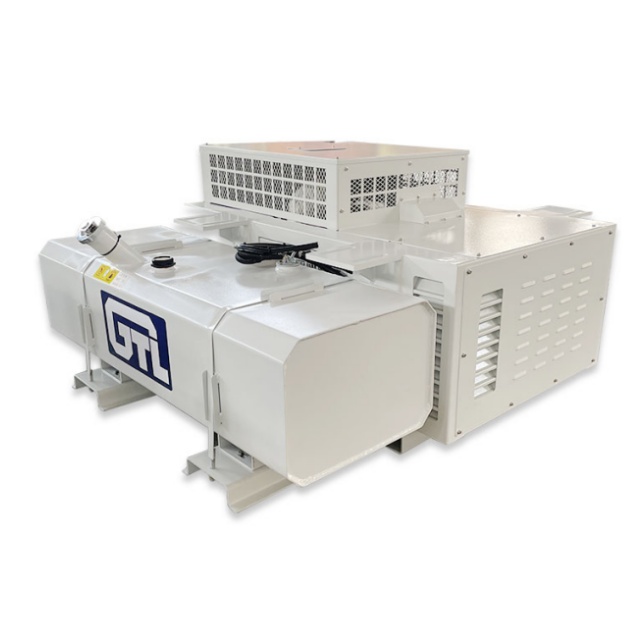
Strict emissions standards mandate specific engine technologies, such as utilizing a high efficiency t4f diesel reefer generator for regulated mobile or prime power applications.
Evaluating a diesel generator set supplier on SLA response times and parts availability is as critical as the hardware specifications.
Differentiating between starting load and running load determines your exact sizing requirements. Motors require a massive surge of current to start spinning. We call this the starting load or surge load. Once running, they consume significantly less energy. You must size your diesel generator set to handle the highest expected surge load safely. Ignoring this surge requirement leads to immediate voltage drops. These drops can crash sensitive electronics across your entire facility.
You also need to understand the relationship between apparent power and real power. Industrial diesel generator set specifications typically rely on a 0.8 Power Factor. We measure apparent power in kVA. We measure real, working power in kW. To find your real power, you multiply the kVA by 0.8. This formula prevents you from overestimating the actual mechanical output available to your equipment.
Standard Power Capacity Conversion Table
Apparent Power (kVA) | Power Factor | Real Power (kW) | Typical Application |
|---|---|---|---|
50 kVA | 0.8 | 40 kW | Small Retail / Telecom |
250 kVA | 0.8 | 200 kW | Mid-size Manufacturing |
500 kVA | 0.8 | 400 kW | Hospitals / Data Centers |
1000 kVA | 0.8 | 800 kW | Heavy Industrial Utilities |
Step load acceptance remains another critical evaluation dimension. It defines the ability to handle sudden, large electrical loads. Good step load acceptance prevents critical frequency dips. However, you must actively avoid chronic under-loading. Running your equipment below 30% of its rated capacity introduces severe implementation risks. Unburned fuel enters the exhaust system in a process called "wet stacking." This glazes the engine cylinders and guarantees premature failure.
You must match the engineered run-profile to your exact operational reality. Manufacturers classify operational limits using strict ISO standards. These standards dictate how long and how hard an engine can run safely.
Standby Power (ESP): Engineers design these exclusively for emergency use during sudden utility outages. They typically run for only 200 to 500 hours annually. They offer zero sustained overload capability.
Prime Power (PRP): Facilities use these for unlimited hours of operation. They handle variable loads easily. They also permit a 10% overload for exactly one hour every twelve hours.
Continuous Power (COP): Power plants build these for sustained, non-stop operation. They run at a constant 100% load indefinitely. You find them acting as the main grid baseload in remote areas.
Your shortlisting logic must remain strict regarding these ratings. Do not source a Standby-rated unit for Prime applications simply to save initial costs. The internal components cannot dissipate continuous high heat. Engine degradation accelerates rapidly under incorrect usage. Furthermore, running a Standby unit continuously immediately voids the manufacturer warranty. These resulting repair costs will permanently negate any initial savings.
Regulatory bodies heavily restrict diesel particulate matter and NOx emissions today. The EPA strictly enforces these limits across numerous industries. These environmental regulations directly impact your site permitting. They also determine your legal ability to operate heavy machinery outdoors.
You must evaluate when to specify Tier 3 versus Tier 4 Final technology. Stationary emergency backup systems often still qualify for Tier 3 standards in specific jurisdictions. However, mobile use and prime continuous power demand stricter compliance. You will likely need to specify a high efficiency t4f diesel reefer generator for highly regulated environments.
Specifying Tier 4 Final introduces complex technical implications. The equipment relies on several advanced systems to scrub the exhaust clean:
Diesel Exhaust Fluid (DEF) Management: Injects urea into the exhaust stream to neutralize NOx emissions.
Selective Catalytic Reduction (SCR): Converts harmful nitrogen oxides into harmless water and nitrogen.
Diesel Particulate Filters (DPF): Traps microscopic soot particles before they enter the atmosphere.
Failure to plan for DEF consumption introduces massive implementation risks. You must carefully schedule fluid deliveries and routine exhaust after-treatment maintenance. Neglecting these strict servicing schedules triggers automatic engine derating or complete operational shutdowns.
The engine block provides the raw mechanical power for your facility. However, the alternator and controller determine the actual quality of the electrical output. They also ensure the long-term reliability of your power distribution.
You must pay close attention to the alternator winding pitch. Always specify a 2/3 pitch configuration. This specific pitch minimizes dangerous harmonic distortion in the electrical wave. Clean power proves crucial for sensitive facility electronics. Telecom loads, uninterruptible power supplies (UPS), and variable frequency drives (VFDs) fail quickly under high harmonic distortion. A high-quality diesel generator mitigates these risks directly.
Your evaluation should also scrutinize the onboard control systems. Look exclusively for digital, open-architecture controllers. They must feature robust remote monitoring capabilities using standard protocols like Modbus or SNMP. You also want reliable auto-start triggers and integrated paralleling functionality. Proprietary, locked-down control systems create massive headaches later. They often result in forced vendor lock-in. You lose the ability to perform basic software troubleshooting without paying exorbitant dealer fees.
A highly specified piece of hardware is only as reliable as its aftermarket support. The warranty backing it defines your true operational security. You must audit your vendor just as rigorously as the machine itself.
Lead times and customization capabilities vary wildly between vendors. Assess their engineering flexibility immediately. Can they build specialized acoustic enclosures to meet local noise ordinances? Can they integrate sub-base fuel tanks for 24, 48, or 72-hour extended runtimes? They must also provide specific weatherproofing tailored to your regional climate specs.
You must demand absolute warranty transparency from your chosen diesel generator set supplier. Differentiate clearly between comprehensive coverage and restrictive parts-only warranties. You also need guaranteed response times for emergency field service. Domestic availability of critical replacement parts prevents month-long shipping delays during a crisis.
Supplier Capability Comparison Chart
Evaluation Metric | Tier 1 Supplier Target | Red Flag Warning Signs |
|---|---|---|
Emergency SLA | Under 4 hours on-site response | "Best effort" dispatch wording |
Parts Inventory | Domestic warehouse stocking | Overseas shipping required |
Testing Protocols | Standardized FAT before shipping | No formal load bank testing |
Warranty Scope | Parts, labor, and travel included | Parts replacement only |
Require verifiable MTBF (Mean Time Between Failures) data early in the discussion. You must also mandate a standardized factory acceptance test (FAT). Do not take delivery of any unit until it passes this physical load bank test.
Audit your facility's running and surge wattages thoroughly to establish an accurate kW/kVA baseline before sourcing.
Strictly align your desired ISO rating (Standby, Prime, or Continuous) with your actual application to protect equipment lifespans.
Verify local EPA emissions regulations to determine if costly Tier 4 Final after-treatment technologies are legally required.
Demand open-architecture control systems to prevent expensive vendor lock-in during future maintenance windows.
Finalize a formal Request for Quote (RFQ) using these engineering metrics to guarantee fair, apples-to-apples vendor comparisons.
A: Start by auditing your loads. Sum the running wattages of all critical equipment. Next, identify items with electric motors and multiply their running watts by three to account for starting surge loads. Add these figures together. Finally, build in a 20% margin to accommodate future facility expansion and prevent chronic under-loading.
A: You will cause severe engine damage. Standby units lack the cooling capacity for continuous variable loads. They will overheat rapidly. Internal components degrade fast, and oil consumption spikes. Furthermore, using a standby-rated machine for prime power applications immediately and permanently voids the manufacturer's warranty.
A: It depends strictly on your local jurisdiction and application. Stationary emergency backup generators often remain exempt from Tier 4 Final requirements. However, non-emergency, mobile, or prime power applications almost universally require Tier 4 Final compliance. Always consult local environmental permitting authorities before purchasing.


