

Views: 0 Author: Site Editor Publish Time: 2026-09-03 Origin: Site


Every critical project relies on uninterrupted power to keep operations running smoothly. Power failures often bring construction sites, logistics fleets, and commercial buildings to a sudden halt. When the grid fails, your backup systems must take over flawlessly.
However, choosing the wrong capacity for your equipment creates immense operational risks. Under-sizing leads to severe voltage drops and catastrophic equipment failure. Conversely, over-sizing wastes valuable capital and causes severe engine damage like wet stacking. You must evaluate these operational threats carefully before purchasing.
Selecting the right equipment means balancing peak electrical loads against strict acoustic and environmental rules. In this guide, you will learn how to accurately calculate your true power demand. We will also explore how to evaluate noise ratings, component quality, and supplier credibility to ensure long-term reliability.
Operators frequently misunderstand the dangers of incorrect capacity planning. Many assume a larger unit always guarantees better performance. Others try to save upfront capital by selecting the smallest possible unit. Both approaches create massive operational hazards.
Inadequate capacity creates immediate electrical hazards. When equipment demands more power than the unit can supply, severe voltage dips occur. This undervoltage forces electric motors to draw more current to maintain their speed. The excess current generates intense heat. Over time, this heat melts wire insulation and destroys sensitive components. Circuit boards fry. Machinery shuts down unpredictably. Operational downtime skyrockets. You risk permanent damage to every connected device.
Oversizing presents equally dangerous mechanical risks. Running a large diesel generator at less than 30% to 40% of its rated load prevents the engine from reaching its optimal operating temperature. This causes incomplete combustion. Unburned fuel and carbon particles accumulate in the exhaust system. Industry professionals call this phenomenon "wet stacking." It leads to thick, black smoke emissions. It also degrades engine lubricants rapidly. Premature engine wear follows, drastically shortening equipment lifespan.
Precision capacity planning has a specific technical goal. You want to achieve a continuous running load of 70% to 80% of the prime rating. Operating in this "sweet spot" maximizes fuel efficiency. It ensures complete fuel combustion. It also maintains optimal engine temperatures, preserving internal components for years of reliable service.
Guessing your power requirements guarantees failure. You must take a systematic, data-driven approach. Follow these industry-standard steps to calculate exactly what your site needs.
Begin by mapping every electrical device on your site. Tally the continuous power required by all concurrent systems. Include HVAC units, lighting arrays, server racks, and heavy machinery. Convert all power measurements into a uniform metric, typically Kilowatts (kW) or Kilovolt-Amps (kVA). This gives you the total baseline power needed to keep operations active.
Electric motors do not start smoothly. Inductive loads like compressors, pumps, and heavy motors require massive initial energy. They often draw up to three times their standard running wattage during startup. Identify every inductive load in your audit. Note the highest single starting wattage required by your heaviest piece of equipment. If multiple large motors start simultaneously, combine their surge ratings.
Typical Power Demand Reference Chart
| Equipment Type | Running Load (kW) | Starting Surge (kW) | Surge Multiplier |
|---|---|---|---|
| Standard Lighting Array | 2.0 | 2.0 | 1x |
| Industrial Air Compressor | 5.0 | 15.0 | 3x |
| Server Rack (Cooling Included) | 4.0 | 4.5 | 1.1x |
| Heavy Construction Hoist | 10.0 | 25.0 | 2.5x |
Now, apply the standard capacity formula. Add your total running watts to the highest single starting wattage requirement. This sum establishes your baseline capacity. Finally, add a mandatory 20% to 25% safety buffer. This buffer prevents overloads if equipment slightly underperforms. It also accommodates minor future expansions.
Engines need oxygen to burn fuel. Air density drops at higher elevations or during extreme heat. This physical reality causes capacity loss. Experts call this "derating." Generally, engines lose roughly 1% of their rated capacity for every 100 meters above sea level. Temperatures above 40°C also degrade performance. Always adjust your baseline capacity upward if you operate in extreme environments.
Different industries present entirely different power challenges. A perfectly sized unit for a residential neighborhood will fail miserably on a construction site. You must align your capacity strategy to your specific operating environment.
Construction sites demand rugged, uncompromising power. Cranes, welders, and concrete mixers start and stop constantly. This environment requires robust prime power capabilities. The equipment must possess a very high surge tolerance. Multiple pieces of heavy machinery often start concurrently. You need an oversized alternator to handle these massive, sudden inductive spikes without stalling the engine.
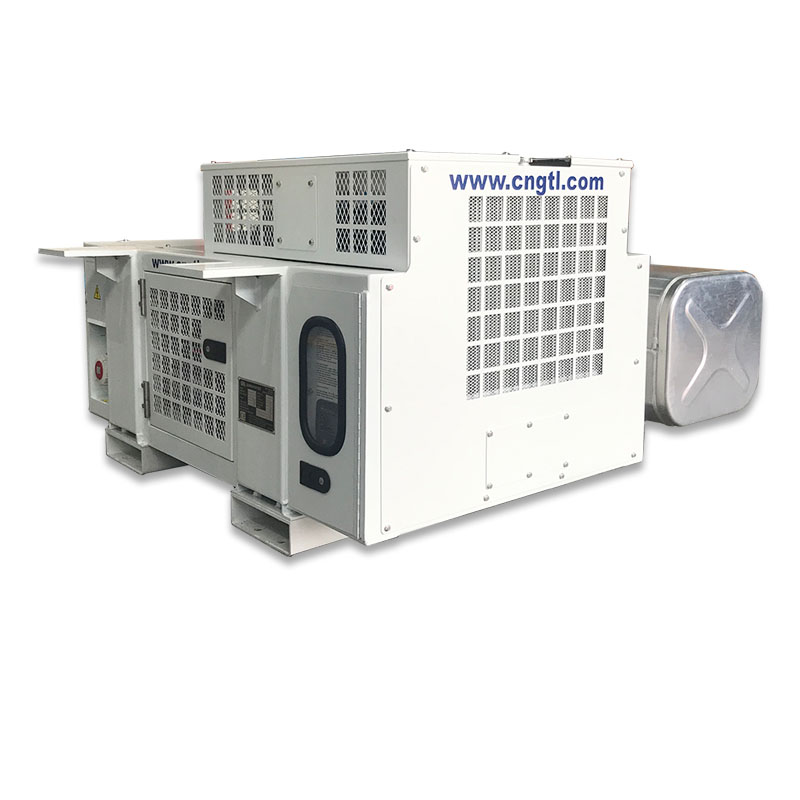
Transport logistics face extreme space constraints. Reefers carry temperature-sensitive cargo across continents. You cannot afford power interruptions when transporting perishable food or pharmaceuticals. This sector requires highly specific, space-saving continuous power solutions. For example, deploying a 15kw 60hz 4tnv88 underslung reefer generator provides the exact compact footprint needed. It mounts cleanly under the chassis. It delivers continuous, reliable cooling power without sacrificing valuable cargo space.
Urban deployments require entirely different priorities. Municipalities enforce strict noise ordinances. Hospitals, banks, and retail centers cannot tolerate loud mechanical drones. This environment prioritizes ultra-low decibel ratings. Furthermore, urban commercial spaces rely heavily on computers and sensitive electronics. You must ensure the unit delivers pure sine wave output to prevent data corruption.
Meeting your power capacity is only the first step. You must closely examine the physical and acoustic construction of the unit. Misleading marketing often disguises inferior engineering. Reviewing silent generator set specifications requires a critical eye.
Noise level marketing can be highly deceptive. Some brands measure sound output at a 15-meter distance at idle speed to claim "whisper-quiet" performance. This measurement is useless for real-world application. You need acoustic transparency. Reliable manufacturers state decibel levels at a standard 7-meter (23-foot) distance while operating at 75% load. Always ask for acoustic data based on this specific 7-meter standard. Compare apples to apples when evaluating noise intrusion.
The physical enclosure dictates the unit's longevity. Inferior canopies rust quickly in harsh weather. Evaluate the physical materials thoroughly. Look for thick, galvanized steel construction. Ensure the exterior features weather-resistant powder coating to prevent corrosion. Inside the canopy, inspect the acoustic insulation. High-density, fire-retardant acoustic foam absorbs engine vibrations far better than cheap alternatives. Quality enclosures also feature specialized air-intake baffles. These baffles allow maximum airflow for cooling while trapping sound waves inside.
The internal components separate reliable equipment from disposable machinery. Focus on continuous-duty diesel engines from reputable global manufacturers. The alternator is equally vital. Demand heavy-duty, 100% copper-wound alternators. Avoid aluminum-wound alternatives. They overheat quickly under heavy loads. Additionally, check the Total Harmonic Distortion (THD) rating. A premium silent generator set will maintain a THD under 5%. This ensures clean, stable power delivery for sensitive electronics.
Your relationship with the manufacturer matters just as much as the equipment itself. Complex machinery eventually requires maintenance. Choosing a subpar vendor exposes you to prolonged operational downtime. Evaluate your partners rigorously.
Never accept a unit fresh off the assembly line without verification. A credible silent generator set supplier will provide certified load bank test reports before shipping. Load bank testing forces the equipment to run at its maximum rated capacity in a controlled environment. This process verifies actual power output. It confirms the acoustic claims. It also exposes hidden manufacturing defects before the unit arrives at your critical site.
Equipment failure requires immediate action. Assess the vendor's Mean Time To Repair (MTTR) capabilities. Do they have a robust local service network? Can they dispatch technicians quickly? Furthermore, examine their parts inventory. Avoid brands that rely heavily on obscure, proprietary components. You want a unit built with universal, readily available parts. This ensures local mechanics can source filters, belts, and relays without waiting weeks for international shipping.
Industrial equipment must meet strict regulatory standards. Operating uncertified machinery invites heavy fines and insurance liabilities. Verify all relevant certifications before signing a purchase order. Look for EPA emission compliance in North America. Check for CE marking in European jurisdictions. Ensure the equipment meets local safety and environmental laws specific to your deployment region.
Proper equipment sizing is a precise, data-driven process. You cannot rely on rough estimations or guesswork. Over-sizing drains your budget and ruins engines through wet stacking. Under-sizing risks immediate electrical failure and operational collapse. Balancing peak electrical demands with rigorous acoustic standards requires careful analysis.
To ensure total reliability, take immediate action before purchasing. First, compile a comprehensive load inventory of every device on your site. Second, isolate your inductive loads to identify massive startup surges. Finally, consult directly with a certified electrical engineer or a thoroughly vetted supplier. Their expertise will help you finalize a procurement strategy that guarantees stable, quiet, and efficient power for years to come.
A: Prime power is designed for continuous 24/7 use with variable loads over long periods. Standby power is strictly engineered for emergency backup during grid failures. It has limited annual run hours and should never exceed its maximum rating. Overloading a standby unit causes rapid internal damage.
A: Most reliable units measure between 65 dB(A) and 75 dB(A) at a standard 7-meter distance under typical loads. This is comparable to a normal conversation or ambient city traffic. Avoid vendors claiming absolute silence, as internal combustion engines will always produce some measurable noise.
A: Buying oversized equipment wastes significant upfront capital. More importantly, running a large unit on light loads prevents optimal operating temperatures. This causes wet stacking, where unburned fuel builds up in the exhaust. This drastically decreases fuel efficiency and causes premature engine wear.
A: Yes, if your project involves microprocessors, telemetry equipment, or sensitive variable frequency drives (VFDs). Pure sine wave output provides clean, stable power. Standard modified sine wave power is erratic and only suitable for basic resistive heating or simple industrial lighting.


